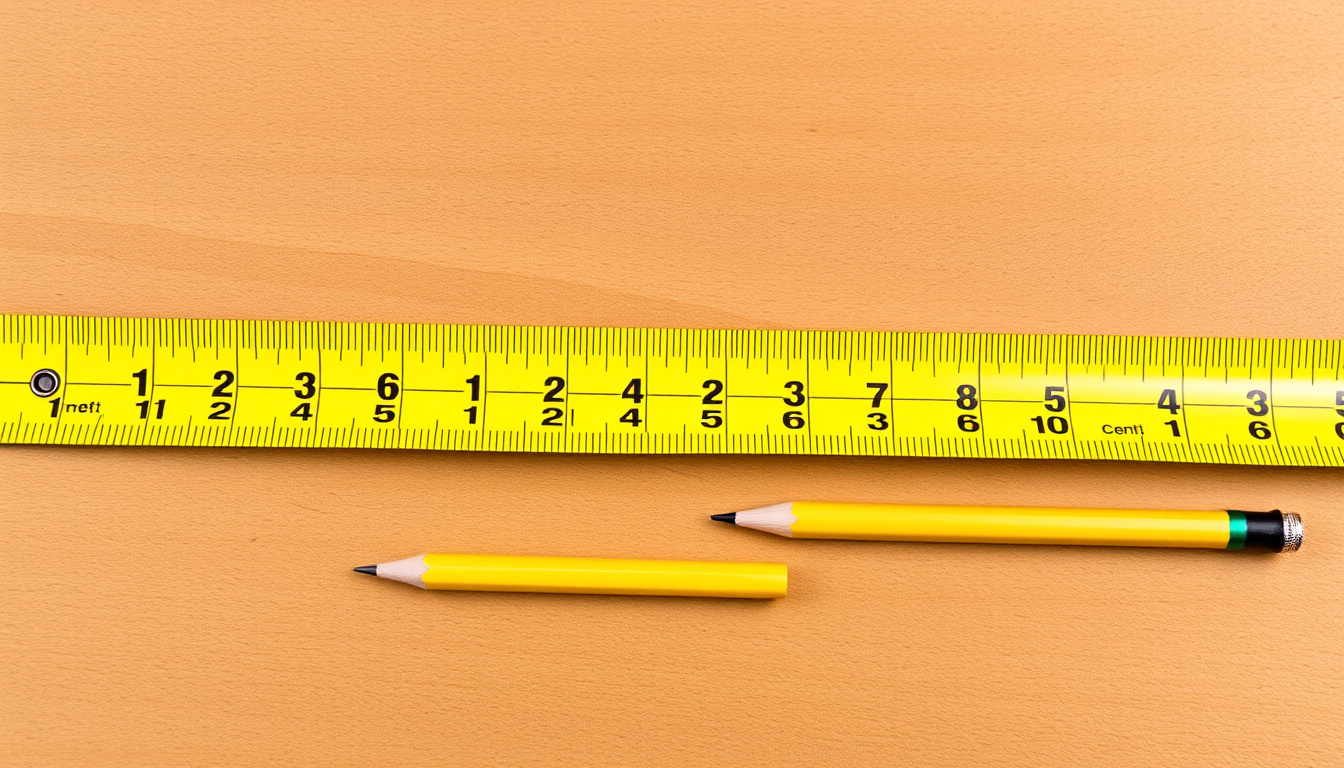
If you’ve ever found yourself staring at a measurement in meters and needed to picture it in centimeters — for a classroom assignment, a DIY project, or just satisfying your own curiosity — you’re in the right place. Converting meters to centimeters is one of the simplest operations in the metric system, and it boils down to a single step: multiply by 100.
1 meter in centimeters: 100 ·
2 meters in centimeters: 200 ·
0.5 meters in centimeters: 50 ·
Conversion factor: Multiply by 100
Quick snapshot
- 1 meter equals 100 centimeters exactly (Math.net math reference)
- Multiply meters by 100 to get centimeters (Mashup Math educational site)
- Whether 200 cm equals 1 meter: this is false; 200 cm equals 2 meters (Math.net math reference)
- The metric system, established in 1799, has defined the meter as the base unit of length ever since (MSTE University of Illinois educational resource)
- Use the conversion for height, dimensions, or worksheets — the same multiply-by-100 rule works for any metric length (Worldometer conversion tool)
| Measurement | Equals |
|---|---|
| 1 meter in cm | 100 cm |
| 2 meters in cm | 200 cm |
| 0.5 meters in cm | 50 cm |
| 2.5 meters in cm | 250 cm |
| 157 cm in meters | 1.57 m |
How do you convert m to cm?
Step-by-step conversion process
Converting meters to centimeters is a straightforward, one-step operation. Here’s how it works:
- Take the number of meters you have.
- Multiply that number by 100.
- The result is the length in centimeters.
For example, if you have 3 meters: 3 × 100 = 300 centimeters. This works for any value, including decimals and fractions (Mashup Math educational site).
Using the multiplication formula
Five examples, one pattern: every conversion relies on the same formula.
| Meters | Calculation | Centimeters |
|---|---|---|
| 1 | 1 × 100 | 100 |
| 2 | 2 × 100 | 200 |
| 0.5 | 0.5 × 100 | 50 |
| 2.5 | 2.5 × 100 | 250 |
| 8.86 | 8.86 × 100 | 886 |
You can verify each result using a standard calculator or an online converter like Worldometer conversion tool.
The pattern: because the metric system is built on powers of ten, every conversion between a base unit and its sub-unit involves a single multiplication or division by a factor of 100. No fractions, no messy conversions — just a clean shift of the decimal point two places to the right.
Is 1 meter 100cm?
Why 1 meter is 100 centimeters
Yes — by definition. The meter is the base unit of length in the International System of Units (SI). The prefix “centi-” comes from the Latin centum, meaning one hundred, so a centimeter is exactly one-hundredth of a meter (Math.net math reference).
The metric system’s decimal basis
This relationship is not arbitrary — it stems from the metric system’s deliberate design in the late 18th century. Every unit steps by a factor of 10. Because meters and centimeters differ only in magnitude (by a power of 100), the conversion is exact and reliable (Math.net math reference).
For students and professionals alike, the base-10 structure means that converting from meters to centimeters is always a clean arithmetic step — no rounding errors, no guesswork.
What is 1m in cm?
Conversion for 1 meter
1 meter equals 100 centimeters exactly. This is the foundational fact from which all other m-to-cm conversions flow (Mashup Math educational site).
Conversion for 2 meters
2 meters equals 200 centimeters. Multiply 2 by 100 to verify (Math.net math reference).
Common multiples and fractions
- 0.5 meters = 50 centimeters
- 2.5 meters = 250 centimeters
These examples show that the rule works equally well for whole numbers and decimals (MSTE University of Illinois educational resource).
A common mistake is thinking 200 cm equals 1 meter. In fact, 200 cm is 2 meters. Always check your multiplication — each 100 cm adds exactly 1 meter.
How to turn 1m into cm?
Step-by-step: turning 1m into cm
- Start with 1 meter.
- Multiply by the conversion factor 100.
- 1 × 100 = 100.
- Write the result as 100 centimeters.
That’s all there is to it (Math with Mr. J educational video).
Using a calculator
Type in 1, press the multiply (×) key, enter 100, then press equals (=). The display shows 100 (Worldometer conversion tool).
Mental math
Since 1 × 100 = 100, you can skip the calculator entirely. Once you memorize the 1:100 ratio, every other m-to-cm conversion becomes second nature.
The implication: you’ve just performed a real-world application of metric logic. No decimals to juggle, no awkward fractions — just a clean, one-step conversion. That’s the power of a base-10 system.
How tall is a 157 cm girl?
Converting centimeters to meters for height
To convert a height given in centimeters back to meters, reverse the operation: divide by 100. For a person who is 157 centimeters tall: 157 ÷ 100 = 1.57 meters (Mashup Math educational site).
Example height conversions
| Height (cm) | Height (m) | Calculation |
|---|---|---|
| 150 | 1.50 | 150 ÷ 100 |
| 157 | 1.57 | 157 ÷ 100 |
| 170 | 1.70 | 170 ÷ 100 |
| 183 | 1.83 | 183 ÷ 100 |
What this means: whether you’re converting up (m to cm) or down (cm to m), the factor is always 100. The metric system’s consistency makes it the standard for science, medicine, and everyday height references worldwide.
“The meter is the base unit of length in the International System of Units (SI). A centimeter is one-hundredth of a meter, and the relationship is exact.”
National Institute of Standards and Technology (NIST) — via Math.net reference
“To convert meters to centimeters, multiply the number of meters by 100. This is a direct application of the metric system’s base-10 structure.”
Students preparing for math tests: memorize the ×100 rule, and you can convert any meter value in seconds. DIYers working with metric dimensions: the same factor applies to lengths, widths, and heights. One rule fits all.
Frequently asked questions
How many centimeters are in 2.5 meters?
2.5 meters equals 250 centimeters. Multiply 2.5 × 100 to get the result (Math.net math reference).
What is the conversion factor from meters to centimeters?
The conversion factor is 100. Multiply meters by 100 to get centimeters (Mashup Math educational site).
How do you convert centimeters back to meters?
Divide the number of centimeters by 100. For example, 500 cm ÷ 100 = 5 m (Mashup Math educational site).
Is 200 cm equal to 2 meters?
Yes, 200 cm = 2 meters. Divide 200 by 100 to confirm (Math.net math reference).
What is the easiest way to remember m to cm conversion?
Remember the phrase “multiply by 100.” For every meter, you get 100 centimeters (Math with Mr. J educational video).
Can I use a calculator for m to cm conversion?
Absolutely. Enter the number of meters, multiply by 100, and read the result in centimeters (Worldometer conversion tool).
What is 0.5 m in cm?
0.5 meters equals 50 centimeters. Multiply 0.5 × 100 (Math.net math reference).
How do you convert meters to centimeters in a fraction?
Convert the fraction to a decimal first. For example, 1/2 meter becomes 0.5, then multiply by 100 to get 50 cm (Mashup Math educational site).
For anyone working with metric measurements — whether in a classroom, a workshop, or a kitchen — the m-to-cm conversion is one of the most dependable rules you’ll ever use. The choice is straightforward: multiply by 100, and you’ll never second-guess a measurement again.

Ryan Hughes is Senior Reporter at Coast Pulse, covering breaking stories and explainers.