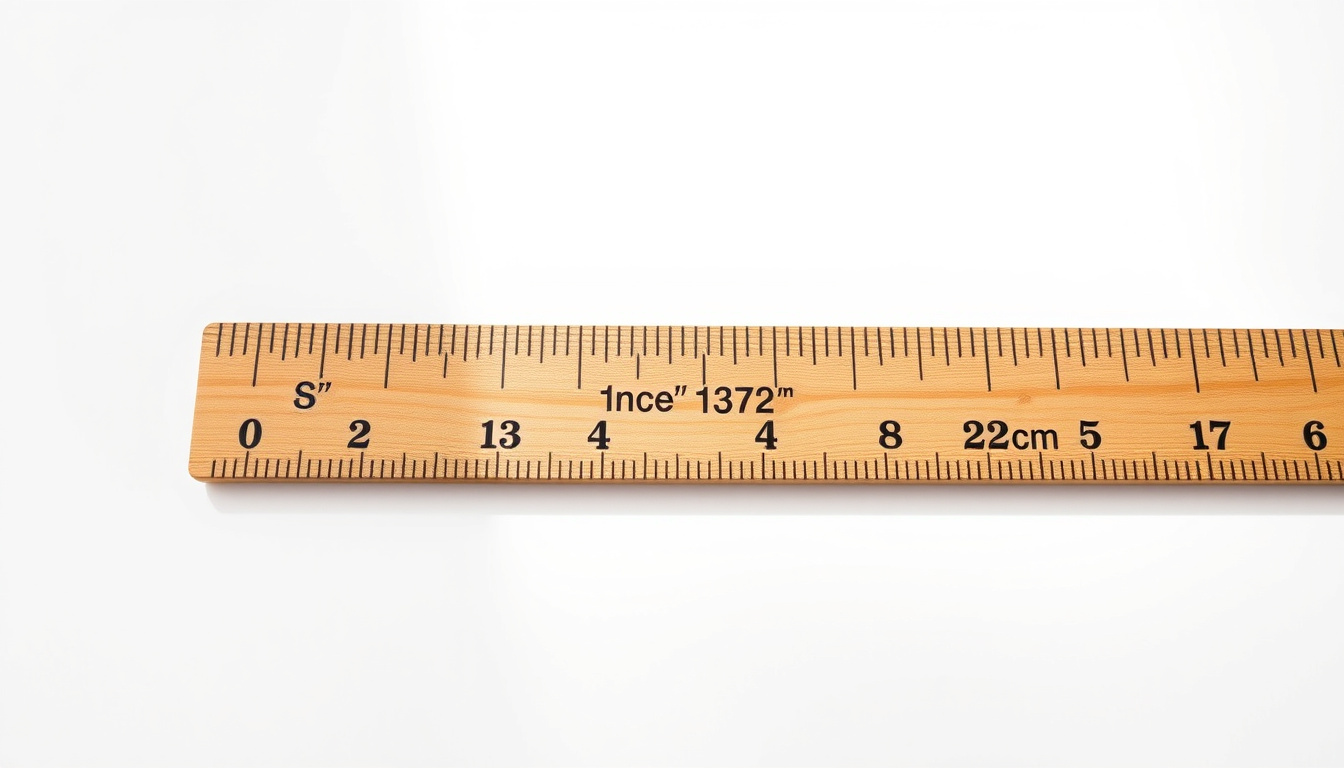
Picture this: you’re at the craft table, phone in one hand, and you need to cut a piece of wire exactly 8 inches long. No ruler nearby. You’ve got a banana on the counter and a couple of popsicle sticks — but how do those stack up? The answer: 8 inches converts to precisely 20.32 centimeters, and once you see what that looks like in everyday objects, you won’t need a tape measure again. This guide runs through the math, visual comparisons, and a few tricks for getting an accurate 8-inch estimate without ever reaching for a ruler.
8 inches: 20.32 cm · 7 inches: 17.78 cm · 10 inches: 25.4 cm · 6 inches: 15.24 cm · 1 inch: 2.54 cm
Quick snapshot
- 8 in = 20.32 cm (Witty Eche)
- 1 inch = 2.54 cm (Witty Eche)
- Exact banana lengths vary by region and ripeness
- Pencil lengths differ by brand and sharpened vs. unsharpened state
- Conversion factors are globally standardized — no regional drift expected
- Online ruler tools with credit card calibration make mobile measurement reliable
| Label | Value |
|---|---|
| Exact Equivalent | 20.32 centimeters |
| Conversion Factor | 2.54 cm per inch |
| Rounded Value | 20 cm (common approximation) |
| Ruler Spans | From 0 to 20.32 cm mark |
| Millimeters | 203.2 mm |
| Feet | 0.6667 ft |
What size is 8 inch in cm?
Eight inches converts to exactly 20.32 centimeters, a figure grounded in the international yard-and-pound agreement that defines one inch as precisely 2.54 centimeters. That single conversion factor unlocks the entire relationship between imperial and metric measurements.
Exact calculation
Multiplying 8 by the standard conversion factor gives you 20.32 cm — not a rounded estimate, but the exact decimal result. The math holds globally: whether you’re measuring in New York, London, or Tokyo, the ratio stays constant because the definitions are standardized internationally (GiniFab measurement tool developer).
Conversion formula
The formula is straightforward: centimeters = inches × 2.54. For 8 inches: 8 × 2.54 = 20.32 cm. Working backward, 20.32 ÷ 2.54 = 8 inches exactly. This predictability makes the metric system especially useful for scientific and engineering work where precision matters.
The metric system doesn’t round — 20.32 cm is the exact equivalent, not a ballpark figure. For craft projects or furniture assembly where tolerances are tight, that precision matters.
How big is a 20 cm?
Twenty centimeters is roughly the length of a standard unsharpened pencil or a medium-sized banana. For most people, visualizing this span helps more than staring at a number — objects you touch every day suddenly become measuring tools.
Real-world comparisons
The list of everyday items approximating 8 inches (20.32 cm) is surprisingly long. A medium banana typically measures 7 to 8 inches in length, according to Measura Logic measurement comparison site. Two standard popsicle sticks laid end to end hit exactly 8 inches (each stick is 4 inches long). Two soda cans placed side by side span approximately 8 inches. A standard unsharpened wooden pencil runs 7.5 to 8 inches, making it a close match.
Ruler visualization
On a standard 12-inch ruler, 8 inches occupies two-thirds of the length. The metric equivalent (20.32 cm) stretches from the zero mark to just past the 20-centimeter line — only 0.32 cm beyond the round number. That’s a gap smaller than the width of a typical pencil mark, which is why many people round to 20 cm in casual contexts.
When you know that a banana or two popsicle sticks equal 8 inches, you can estimate measurements anywhere — no app or tape measure required. This mental shortcut works in kitchens, craft rooms, and hardware stores alike.
How big is 1 cm visually?
One centimeter is about the width of a small fingernail — typically between 0.5 and 1 cm depending on the person. Stack twenty of those widths together, and you’ve hit almost exactly 20 cm, which brings us back to our 8-inch target.
Everyday object matches
A standard paperclip width is roughly 1 cm. A kitchen matches head is another common reference point. The width of a fresh staple (before it’s bent) also hovers around 1 cm. These objects are ubiquitous enough that almost anyone can find one nearby.
Finger width guide
For those without calipers or rulers handy, the width of an adult pinky fingernail typically measures close to 1 cm. Counting twenty fingernail widths gets you to 20 cm — a surprisingly accurate estimation method for quick measurements when precision tools aren’t available.
How long is 6 inches using fingers?
Six inches translates to approximately 15.24 cm, and estimating it with your hand is easier than you might think. The width of your palm (across the knuckles, excluding the thumb) typically spans 3 to 4 inches — so two hand-widths get you close to 6 inches.
Finger-based estimation
One finger width (index finger) measures roughly 1.5 to 2 cm, so four finger-widths approximate 6 to 8 cm. For 6 inches specifically, you’d need about three to four finger-widths, depending on hand size. A more reliable method: spread your thumb and pinky as wide as possible — that span often measures 6 to 7 inches on adult hands.
Scaling to 8 inches
If 6 inches equals about 15.24 cm, then 8 inches (20.32 cm) adds roughly two more finger-widths or about a third more of your hand-span. Think of it this way: your full hand-spread plus one additional finger-width gets you into the 8-inch range. This method won’t replace a ruler, but it gives you a solid ballpark for quick estimates.
Hand-based estimation works fine for rough measurements, but accuracy varies by hand size. For precise work — cutting materials, sizing furniture — use a ruler or online calibration tool instead.
Is 8 inches 20cm?
Technically, no — 8 inches is 20.32 cm, which is 0.32 cm (about 3 millimeters) more than 20 cm. The difference is small enough that many people round down in casual conversation, but in contexts requiring precision, that gap matters.
Precise math check
Working out the math: 8 × 2.54 = 20.32. The decimal .32 represents 3.2 millimeters beyond the round 20-centimeter mark. On a ruler, that extra distance is roughly the thickness of three stacked credit cards or about half the diameter of a standard pencil.
Common rounding
In everyday contexts — estimating furniture dimensions, comparing clothing sizes, quick DIY measurements — rounding to 20 cm works fine. But in engineering, medicine, or technical crafting, using the exact value (20.32 cm) prevents cumulative errors that can throw off final results by centimeters over multiple measurements.
How to measure 8 inches without a ruler
You don’t always have a ruler within reach, but objects in every home can stand in. Knowing which items consistently measure close to 8 inches turns your environment into a makeshift measuring station.
Using a credit card for calibration
A standard credit card measures 85.60 mm wide, which equals 3.37 inches (GiniFab measurement tool developer). Two credit card widths plus about a third of a third card gets you to roughly 8 inches. This is how many online ruler apps work — they use the card’s known dimensions to calibrate your screen.
Online ruler tools
Websites like GiniFab online ruler and LabelValue printable ruler resource offer rulers you can use directly on your screen or print. The GiniFab tool specifically uses credit card calibration to ensure accuracy, making it reliable for measuring 8 inches on a phone or laptop without a physical ruler.
Printable rulers
Free printable rulers in actual size (both inches and centimeters) are available from LabelValue printable ruler collection. Printing one and keeping it in a toolbox or kitchen drawer means you always have a reliable measuring tool handy. The advantage over phone apps: no calibration required, and no screen-size variables to worry about.
Screen-based rulers only work if your display settings are at 100% zoom. Zoomed-in or zoomed-out screens distort the on-screen measurement. Always check the calibration — a mismatched ruler is worse than no ruler at all.
Objects that are approximately 8 inches long
A surprisingly wide range of everyday items cluster around the 8-inch mark. These aren’t precise measurements — object dimensions vary by manufacturer and condition — but they’re close enough for estimation when you need a quick sense of scale.
Eight items commonly cited at roughly 8 inches include a dinner fork (blade length), a chef’s knife blade, a medium banana, an unsharpened pencil, a small frying pan diameter, a personal pizza, a hardcover novel (width), a standard envelope (lengthwise), and a rectangular makeup palette (Feet2Inches measurement reference). Portable water bottles and compact smart speakers also frequently measure around 8 inches in height, according to Measura Logic measurement guide.
For tech, the Apple iPad Mini features an 8-inch diagonal display, making it a modern reference point for anyone familiar with tablets (The Future of Things gadget reference). Cutting boards, small salad plates, and square baking pans also fall into this size range.
Visualizing 8 inches can be tricky without a ruler. Numbers alone rarely give a true sense of size.
The simplest way to calibrate the scale is to prepare a credit card. Its known width provides a reference point for accurate on-screen measurements.
— GiniFab tool developer
The imperial-to-metric conversion holds steady worldwide — there’s no variation between regions or manufacturers for the core math, since the definitions are internationally agreed upon (GiniFab measurement authority). What varies is the object: a banana from one grocery store might measure 7 inches, while another hits 8. The pencil in your desk drawer might be 7.5 inches sharpened versus 8 inches fresh from the package.
Quick conversion table: common inch-to-cm measurements
Five sizes, one pattern: the conversion factor of 2.54 stays constant, and each increment of one inch adds exactly 2.54 centimeters.
| Inches | Centimeters | Millimeters |
|---|---|---|
| 1 in | 2.54 cm | 25.4 mm |
| 6 in | 15.24 cm | 152.4 mm |
| 7 in | 17.78 cm | 177.8 mm |
| 8 in | 20.32 cm | 203.2 mm |
| 10 in | 25.40 cm | 254.0 mm |
The math behind this table is consistent: multiply any inch value by 2.54 to get centimeters, or divide by 2.54 to convert the other way. Once you internalize that 2.54 multiplier, you can calculate any imperial-to-metric conversion on the fly.
Related reading: online ruler for inches and cm · printable ruler in inches and cm
alamy.com, boringmagazine.co, dimensionspoint.com, youtube.com
Our breakdown of 8 inches as 20.32 cm pairs well with this companion guide, offering extra ruler visuals and object comparisons.
Frequently asked questions
What size is 8 inch in cm?
Eight inches equals exactly 20.32 centimeters. This is calculated by multiplying 8 by the international conversion factor of 2.54 cm per inch.
Is 8 inches exactly 20 cm?
No — 8 inches is 20.32 cm, which is 0.32 cm (about 3 millimeters) more than 20 cm. Many people round to 20 cm in casual contexts, but the exact value is 20.32 cm.
How do you convert inches to cm?
Multiply the inch value by 2.54. For example: 8 × 2.54 = 20.32 cm. To convert centimeters to inches, divide by 2.54.
What does 8 inches look like on a ruler?
On a standard 12-inch ruler, 8 inches spans from the zero mark to the 8-inch mark — two-thirds of the total length. In centimeters, that span reaches 20.32 cm, just past the 20 cm line by about 3 millimeters.
How many cm is 7 inches?
Seven inches equals 17.78 centimeters (7 × 2.54 = 17.78 cm).
What everyday object is 8 inches long?
A medium banana, an unsharpened pencil, two popsicle sticks laid end to end, or a chef’s knife blade all measure approximately 8 inches. Tablet screens (like the iPad Mini) also commonly feature 8-inch diagonals.
Is 20 cm the same as 8 inches?
They’re close but not identical. Twenty centimeters is 0.32 cm shorter than 8 inches. For most everyday purposes, the difference is negligible, but for precision work, use the exact value: 20.32 cm.

Rachel Bennett leads fact-checking, source verification and corrections at Coast Pulse.