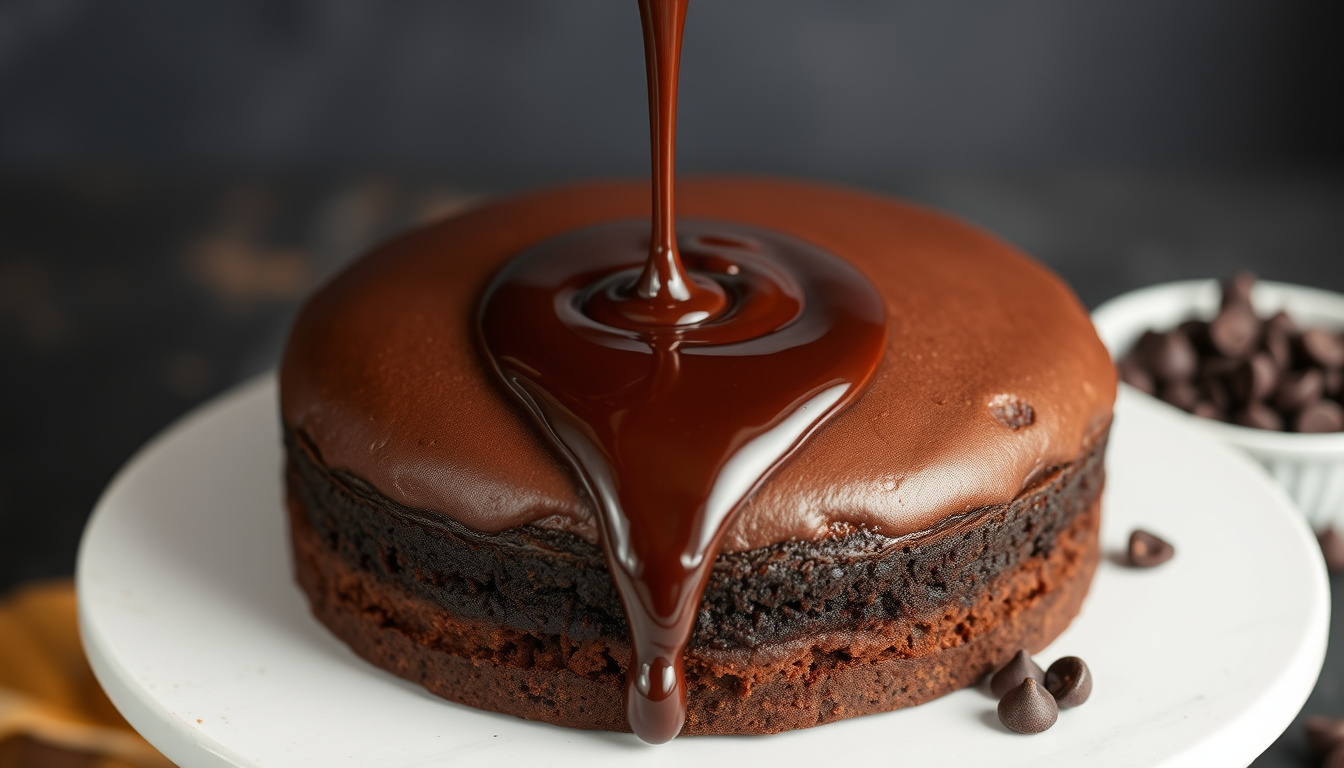
Making chocolate ganache feels like a small miracle. Two simple ingredients—chocolate and cream—come together to create a silky, versatile glaze, filling, or truffle base. The magic lies in the ratio. For a classic dark chocolate ganache, the standard is 2 parts chocolate to 1 part cream by weight (Baker Bettie (pastry educator)). Whether you’re frosting a cake or pouring over ice cream, mastering this ratio is the first step to perfect ganache.
Standard ratio (dark chocolate): 2:1 chocolate to cream by weight ·
Standard ratio (milk chocolate): 3:1 chocolate to cream by weight ·
Standard ratio (white chocolate): 3:1 chocolate to cream by weight ·
Common uses: Glaze, filling, frosting, truffles ·
Storage life: Up to 2 weeks refrigerated
Quick snapshot
- 2:1 for dark chocolate (Baker Bettie)
- 3:1 for milk/white chocolate (Matt Adlard)
- Adjust for desired texture (Baker Bettie)
- Chop chocolate fine (Craftsy)
- Heat cream to 80-85°C (Matt Adlard)
- Pour and wait 5 min before stirring (King Arthur Baking)
- Stir gently from center outward (Craftsy)
- Use heavy cream (36% fat) (King Arthur Baking)
- Don’t overheat cream (King Arthur Baking)
- Check consistency before pouring (King Arthur Baking)
- Use quality chocolate (King Arthur Baking)
- Mary Berry’s classic (BBC Good Food)
- Jamie Oliver’s tiramisu style (BBC Good Food)
- Simple 2-ingredient base (BBC Good Food)
Four confirmed facts, one pattern: the ratio defines the ganache’s purpose. Dark chocolate can handle less cream; milk and white need more to stay smooth.
| Fact | Value |
|---|---|
| Ideal dark chocolate ratio | 2:1 (chocolate:cream) (Baker Bettie) |
| Key ingredient | Heavy cream (36% fat) (King Arthur Baking) |
| Preparation time | 10 minutes (Craftsy) |
| Shelf life | Up to 2 weeks refrigerated (Baker Bettie) |
| Thin glaze ratio | 1:1.5 chocolate:cream (Baker Bettie) |
| White chocolate ratio | 3:1 chocolate:cream (Matt Adlard) |
What is the best ratio for chocolate ganache?
Three chocolate types, three key ratios—here’s how they differ.
Dark chocolate (60-70% cocoa) handles a tight 2:1 ratio because its high cocoa butter content acts as an emulsifier. Milk and white chocolates, with more sugar and milk solids, need extra cream to stay fluid.
| Chocolate type | Ratio (choc:cream by weight) | Best use | Notes |
|---|---|---|---|
| Dark 60-70% | 2:1 | Truffles, thick frosting | Baker Bettie |
| Dark for glaze | 1:1.5 | Pourable glaze | Thin consistency (Baker Bettie) |
| Milk chocolate | 3:1 | Filling, frosting | Sweeter, more delicate (Matt Adlard) |
| White chocolate | 3:1 | Mousses, fruit ganaches | Needs gentle heating (Matt Adlard) |
| Bittersweet (70%+) | 2.5:1 | Ultra-rich truffles | Adjust for creaminess (Craftsy) |
| Any chocolate for drip | 1:1 | Thin drip cake | Add corn syrup for shine |
The implication: adjusting the ratio is not just about texture—it’s about the type of chocolate you choose. Dark chocolate’s higher cocoa butter content allows it to emulsify with less cream, while milk and white chocolate need more cream to stay fluid.
Ratio for dark chocolate
- Use 2:1 chocolate to cream for standard dark ganache (Baker Bettie)
- A 1:1.5 ratio produces a pourable glaze (Baker Bettie)
- Chocolate with 60-70% cocoa solids works best (Matt Adlard)
Ratio for milk chocolate
- Use 3:1 chocolate to cream (Matt Adlard)
- Milk chocolate contains more sugar, which can make the ganache softer (Craftsy)
Ratio for white chocolate
- Use 3:1 chocolate to cream (Matt Adlard)
- White chocolate’s high fat content requires more cream to prevent oiliness (Matt Adlard)
Ratio adjustments for specific uses (glaze, frosting, truffles)
- For a drip cake glaze, thin the ganache to 1:1 and add corn syrup for shine
- For fluffy frosting, whip cooled ganache after it thickens (Craftsy)
- For truffle centers, a 2:1 ratio set at room temperature works best (Baker Bettie)
What is the secret to good ganache?
Great ganache relies on four factors: chocolate quality, cream temperature, stirring technique, and optional boosters.
Choosing high-quality chocolate
- Use chocolate with at least 60% cocoa solids for dark (Matt Adlard)
- Finely chop chocolate to marble-sized pieces for even melting (Craftsy)
Proper cream heating
- Heat cream to 80-85°C (176-185°F) to avoid splitting cocoa butter (Matt Adlard)
- Do not boil cream—boiling causes separation (King Arthur Baking)
Emulsification technique
- Pour hot cream over chopped chocolate and let sit 5 minutes before stirring (King Arthur Baking)
- Stir gently from the center outward to reduce air bubbles (Craftsy)
Adding butter or corn syrup for shine
- Add a pinch of salt to enhance flavor (Baker Bettie)
- For extra gloss, whisk in 1 tablespoon corn syrup per cup of ganache before cooling
- Butter (1-2 tbsp per cup) gives a satiny finish and softens the set
High-quality chocolate costs more but produces a smoother, shinier result. Corn syrup adds gloss but sweetens the ganache—use sparingly. Butter improves texture but reduces shelf stability.
The implication: Each booster comes with a trade-off, so choose based on your priority—sheen, shelf life, or texture.
What is the best way to make chocolate ganache?
- Step 1: Chop chocolate finely
- Cut chocolate into uniform, marble-sized pieces using a sharp knife (Craftsy)
- Smaller pieces melt faster and more evenly (King Arthur Baking)
- Step 2: Heat cream until just simmering
- Heat heavy cream (36% fat) over medium heat until small bubbles appear around the edge (Matt Adlard)
- Do not let cream boil; remove from heat immediately (King Arthur Baking)
- Step 3: Pour cream over chocolate and let sit
- Pour hot cream over chopped chocolate in a heatproof bowl (King Arthur Baking)
- Let mixture stand for 5 minutes without stirring (King Arthur Baking)
- Step 4: Stir gently until smooth
- Stir with a spatula starting from the center and working outward in concentric circles (Craftsy)
- Avoid rapid stirring or whisking to minimize air bubbles (Matt Adlard)
- If lumps remain, let sit another 2-3 minutes and stir gently again
- Step 5: Cool to desired consistency
- For a pourable glaze, use immediately (thin consistency)
- For frosting or filling, allow to cool to room temperature, then refrigerate 1-2 hours to thicken (Baker Bettie)
- For truffles, let set at room temperature until firm enough to roll (about 4-6 hours)
The catch: The 5-minute wait is non-negotiable for a stable emulsion.
What are common ganache mistakes?
Four frequent errors, each with a fix.
Using the wrong cream (low fat)
- Heavy cream must contain at least 36% fat (King Arthur Baking)
- Lower fat content causes separation—fix by whisking in extra heavy cream 1 tbsp at a time (Craftsy)
Overheating cream
- Boiling cream can split the emulsification (King Arthur Baking)
- Fix a broken ganache by adding hot tap water (90-95°F) gradually while stirring (King Arthur Baking)
- Alternatively, whisk in cold heavy cream 1 tbsp at a time (Craftsy)
Stirring too vigorously
- Overmixing creates air bubbles and can cause graininess (Matt Adlard)
- Fix a grainy texture by gently reheating the ganache and stirring slowly with a spatula
Using poor quality chocolate
- Low-quality chocolate (low cocoa butter, added oils) will produce a dull, greasy ganache (Matt Adlard)
- If ganache sets too hard or too soft, try a different chocolate brand with higher cocoa butter (Paul Bradford (cake decorating educator))
Pouring ganache too early or too late
- For a glaze, pour when ganache is warm and thin (about 30-35°C)
- For filling, let ganache cool until it reaches a spreadable, peanut-butter consistency (Craftsy)
- If ganache becomes too thick, re-warm gently over a double boiler and whisk in a little more cream (Craftsy)
Most ganache mistakes boil down to rushing—either overheating the cream or skipping the 5-minute wait before stirring. Patience is cheaper than fixing a broken emulsion.
Most mistakes are avoidable by controlling heat and patience.
How to make Mary Berry chocolate ganache?
Chef variations build on the same core technique. Mary Berry’s classic ganache uses a 2:1 ratio by weight (300g dark chocolate to 300ml double cream) featured in her baking collection (BBC Good Food (UK cooking authority)). Jamie Oliver’s tiramisu-style ganache adds mascarpone for a creamier, richer texture (Jamie Oliver (celebrity chef)).
Mary Berry’s classic ganache
- 300g dark chocolate (60-70% cocoa), finely chopped
- 300ml double cream (36% fat)
- Optional: 1 tbsp butter for extra shine (as recommended by professional pastry chefs)
- Follow the standard method: heat cream, pour over chocolate, wait 5 minutes, stir
Jamie Oliver’s tiramisu ganache
- Uses 200g dark chocolate, 200ml double cream, 100g mascarpone
- Mascarpone replaces some cream, making the ganache richer and fluffier
- Ideal for cake fillings and layered desserts
Variations for cake filling vs. drip
- For cake filling, use a 2:1 ratio and cool until spreadable
- For drip effect, use a 1:1 ratio and add corn syrup for gloss
- For truffles, use a 2.5:1 ratio with dark chocolate and let set at room temperature
Confirmed facts
- Ganache requires heavy cream with at least 36% fat (King Arthur Baking)
- Quality chocolate directly affects final product (Matt Adlard)
- Standard dark ganache uses 2:1 ratio (Baker Bettie)
What’s unclear
- Effect of cocoa butter content in different chocolate brands on final consistency
- Optimal cooling time for specific consistencies (varies by ambient temperature)
- Best temperature for pouring glaze without melting cake frosting
- Ratio by weight vs volume: unclear if volume-based ratios are reliable for all chocolate types
Both variations prove that the core technique is adaptable without losing reliability.
“The key to a perfect ganache is to use a good quality chocolate and to heat the cream to exactly 80-85°C.”
— Matt Adlard (pastry chef and educator), Chocolate Ganache Guide
“A pinch of salt elevates the flavor without making it salty. It’s a small addition that professional bakers swear by.”
— Baker Bettie (pastry educator), How to Make Ganache
“After pouring cream over chocolate, let it sit for 5 minutes before stirring—this allows the chocolate to melt completely and prevents graininess.”
— King Arthur Baking (bakery authority), How to Fix Broken Ganache
For home bakers, the path to perfect ganache is clear: master the ratio (2:1 for dark, 3:1 for milk/white), respect the cream temperature (80-85°C), and always wait 5 minutes before stirring. Once you’ve nailed the basics, experiment with chef variations—but only after you’ve learned to fix the mistakes. Just as you need the right pan for a recipe (see our carbon steel pan vs cast iron guide), ganache demands the right cream and chocolate. And like knowing what’s safe for your pet (check our can dogs eat tomato safety guide), understanding ganache storage is essential. For bakers who want consistent results, the decision is simple: invest in quality ingredients, follow the ratio by weight, and let patience do its job.
For a silky smooth ganache, it’s essential to master melting chocolate properly to avoid seizing or burning.
Frequently asked questions
Can I use milk instead of cream for ganache?
No—milk has too little fat to create a stable emulsion. Use heavy cream with at least 36% fat (King Arthur Baking).
How long does chocolate ganache last at room temperature?
If made with heavy cream, ganache can sit at room temperature (68-72°F) for up to 2 days. Refrigerate for longer storage (Baker Bettie).
Can I freeze ganache for later use?
Yes—freeze in an airtight container for up to 3 months. Thaw in the refrigerator overnight, then reheat gently (Craftsy).
Why did my ganache turn greasy?
Greasy ganache usually indicates too much heat or low-fat cream. Fix by whisking in cold heavy cream 1 tablespoon at a time (Craftsy).
How do I fix curdled or separated ganache?
Add hot water (90-95°F) 1 tablespoon at a time while stirring, or whisk in cold heavy cream (King Arthur Baking).
Can I use white chocolate in the same way as dark chocolate?
White chocolate requires a 3:1 ratio due to its high cocoa butter content (Matt Adlard). Heat more gently to avoid burning.
How do I thin ganache for a pourable glaze?
Reheat the ganache gently and whisk in more heavy cream or hot water until you reach the desired consistency (Craftsy).

Ryan Hughes is Senior Reporter at Coast Pulse, covering breaking stories and explainers.