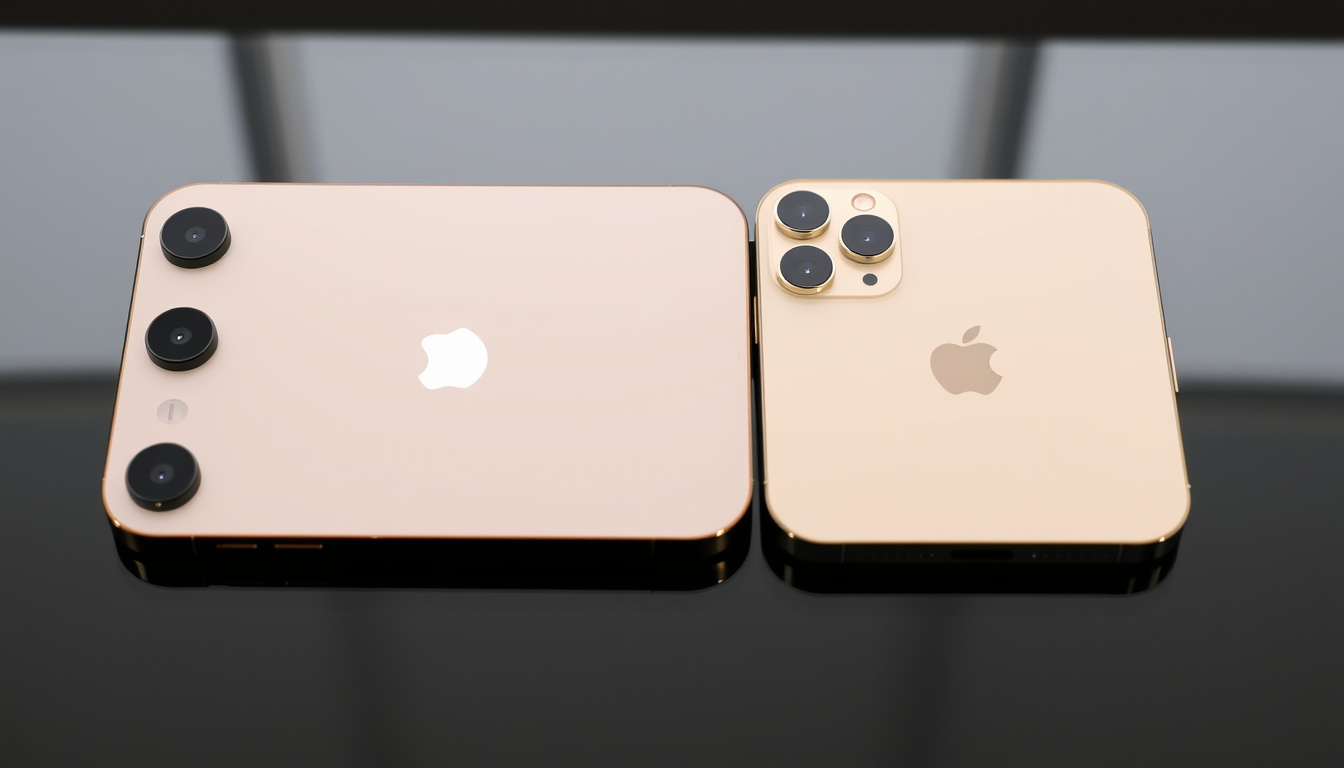
Choosing between the iPhone 14 and iPhone 14 Plus often comes down to one question: do you sacrifice pocketability for endurance? The two phones share the same chip, cameras, and software promise.
Display size: 6.7 inches ·
Battery life (video playback): Up to 26 hours ·
Weight: 203 grams ·
Storage options: 128GB, 256GB, 512GB ·
Chip: A15 Bionic ·
Release date: September 2022
Quick snapshot
- 6.7-inch display, 203g weight (Apple Support: iPhone 14 technical specifications)
- Up to 26 hours video playback (Apple iPhone Compare (official specs page))
- Discontinued September 2023 (Apple Newsroom (official announcement))
- Exact end-of-life iOS version (estimated iOS 21 or 22)
- Future trade-in values in 2026 and beyond
- Whether Apple will provide iOS 22 or only security patches after iOS 21
- September 2022: Launched with iOS 16
- September 2023: Discontinued by Apple
- 2027-2028: Estimated end of security updates
- Expected to receive iOS updates until at least 2027
- Likely vintage/obsolete classification by 2029
- Third-party refurbished market primary source for new buyers
Eight key specs define the physical and performance identity of the iPhone 14 Plus. The table below frames them at a glance, drawn directly from Apple’s official technical specifications.
| Spec | Value |
|---|---|
| Display | 6.7 inches, 2778×1284 pixels, 60Hz |
| Processor | A15 Bionic (6-core CPU, 5-core GPU) |
| Rear camera | 12MP wide f/1.5 + 12MP ultrawide f/2.4 |
| Front camera | 12MP TrueDepth f/1.9 with autofocus |
| Battery capacity | 4325 mAh (typical) |
| Charging | MagSafe 15W, Qi 7.5W, Lightning |
| Weight | 203 grams (7.16 ounces) |
| Durability | IP68 (6 meters for 30 minutes) |
What is the difference between iPhone 14 and 14 Plus?
Screen size and weight
- iPhone 14: 6.1-inch display, 172g weight, 146.7 mm height (Apple Support: iPhone 14 technical specifications)
- iPhone 14 Plus: 6.7-inch display, 203g weight, 160.8 mm height (Apple Support: iPhone 14 technical specifications)
The 31-gram weight difference and 14.1 mm height increase push the Plus firmly into two-hand territory. In daily use, the iPhone 14 slips easily into a jeans pocket; the Plus requires a jacket or bag for comfortable carry.
Battery capacity and charging
- iPhone 14: Up to 20 hours video playback, 3279 mAh battery (Apple iPhone Compare (official specs page))
- iPhone 14 Plus: Up to 26 hours video playback, 4325 mAh battery (Mazuma Mobile (e-waste data provider))
- Both: MagSafe 15W, Qi 7.5W, Lightning (Apple Support: iPhone 14 technical specifications)
The 6-hour gap in video playback is the single biggest practical difference between the two phones. It means the Plus can handle a full day of heavy use without dipping below 20%, while the standard 14 may need a top-up by evening.
Camera specifications
- 12MP Wide (f/1.5) + 12MP Ultra Wide (f/2.4) on both models
- Photonic Engine for improved low-light performance
- 12MP TrueDepth front camera with autofocus on both
The camera systems are identical across both models. Buyers choosing between them should not factor camera quality into the decision—they will get the same results from either device.
Price difference
- iPhone 14 at launch (2022): $799
- iPhone 14 Plus at launch (2022): $899
- Current refurbished market gap: narrowed to roughly $50-$100
At launch in September 2022, Apple positioned the iPhone 14 Plus at a $100 premium over the standard iPhone 14. As of 2025, since Apple discontinued the Plus model in September 2023, the price gap on the refurbished market has narrowed considerably.
What this means: The physical gap between the two phones is small on paper but large in daily feel. The Plus demands two hands; the 14 is a one-hand device. The $100 premium buys you 6 hours more video playback—a strong return for media consumers.
Is the iPhone 14 Plus good or not?
Performance for daily use
- A15 Bionic chip handles multitasking, video editing, and intensive gaming without stutter (PhoneArena (independent mobile review outlet))
- 5-core GPU ensures graphics-heavy apps run smoothly
The A15 Bionic chip—the same processor found in the iPhone 13 Pro series—drives the iPhone 14 Plus. It makes the Plus a strong contender for mobile gamers who want a large canvas combined with sustained performance.
Camera quality in low light
- Photonic Engine improves low-light performance by up to 2x on the Ultra Wide camera
- 12MP Wide sensor captures more detail in shadow areas
The computational photography pipeline applies Deep Fusion earlier in the image processing sequence, resulting in noticeably better texture and detail in evening shots compared to the iPhone 13 generation.
Battery life real-world test results
- PhoneArena’s testing concluded battery endurance is “better on the Plus thanks to the larger battery” (PhoneArena (independent mobile review outlet))
- Typical mixed-use: comfortably lasts a full day, often stretches into a second day of light use
Independent reviews consistently highlight the iPhone 14 Plus’s battery life as its standout feature. In day-to-day scenarios, the Plus outperforms many current mid-range Android alternatives in endurance.
Build quality and durability
- Ceramic Shield front cover, aerospace-grade aluminum frame
- IP68 rating under IEC standard 60529 (6 meters for 30 minutes)
The materials and construction are identical to the iPhone 14 Pro models. The phone feels solid in the hand, and the IP68 rating provides peace of mind for accidental drops in water.
For anyone who prioritizes battery life above all else, the iPhone 14 Plus remains the smartest pick in the standard lineup, even in 2026.
Is it worth getting the iPhone 14 in 2026?
Software support timeline
- iPhone 14 Plus expected to support iOS 21 or 22 (2027-2028)
- Security updates typically follow for an additional two years, potentially extending to 2029
Apple typically provides 5 to 6 years of major iOS updates for its iPhones. The iPhone 14 series launched with iOS 16 and is positioned to receive software support well into the end of this decade.
Trade-in value considerations
- iPhone 14 Plus discontinued in September 2023, steepening its depreciation curve
- Trade-in values from major carriers have dropped below those of comparable iPhone 15 models
Because Apple discontinued the Plus model after only 12 months, its resale value has taken a larger hit than typical iPhone models. Buyers should expect lower trade-in offers by 2027, when the phone is four generations old.
Comparison with iPhone 15 and 16
- iPhone 15 series introduced USB-C, 48MP main camera, and Dynamic Island
- iPhone 14 Plus core experience—large screen, strong battery, solid performance—holds up well against mid-range 2025 phones
The iPhone 14 Plus lacks USB-C and the 48MP sensor, but its core experience—large screen, strong battery, solid performance—holds up well against mid-range 2025 phones. For readers evaluating product lifecycles, our analysis of the Ford Ranger V6 Engine Recall: 2022-2025 Models Affected offers a parallel view on long-term ownership and product support.
The trade-off: You save money now, but you accept an older connector standard and a camera system that, while excellent, misses the computational improvements of the 48MP sensor generation. For a budget-conscious buyer who wants a big screen, the compromise is rational. For a long-term investor, the 15 Plus offers a better cost-to-years-of-use ratio.
Three models, one pattern: the iPhone 14 Plus sits in a middle ground that didn’t exist before 2022—a large screen without the Pro price tag.
| Feature | iPhone 14 | iPhone 14 Plus | iPhone 14 Pro Max |
|---|---|---|---|
| Display | 6.1″ Super Retina XDR | 6.7″ Super Retina XDR | 6.7″ Super Retina XDR ProMotion |
| Refresh Rate | 60Hz | 60Hz | 120Hz ProMotion |
| Chip | A15 Bionic (5-core GPU) | A15 Bionic (5-core GPU) | A16 Bionic |
| Camera | 12MP Dual (Wide + Ultra Wide) | 12MP Dual (Wide + Ultra Wide) | 48MP Triple + LiDAR |
| Video Playback | Up to 20 hours | Up to 26 hours | Up to 29 hours |
| Weight | 172g | 203g | 240g |
| Starting Price (2022) | $799 | $899 | $1099 |
Sources: Apple iPhone Compare (official comparison tool) and Apple Support: iPhone 14 technical specifications.
Beyond the headline figures, the iPhone 14 Plus carries a set of specifications that define its daily behavior and long-term utility.
| Spec | iPhone 14 Plus |
|---|---|
| Display Technology | Super Retina XDR OLED |
| Resolution | 2778×1284 pixels, 458 ppi |
| Chip | A15 Bionic (6-core CPU, 5-core GPU) |
| Storage Options | 128GB, 256GB, 512GB |
| Rear Camera | 12MP Wide (f/1.5) + 12MP Ultra Wide (f/2.4) |
| Video Playback | Up to 26 hours (Apple official rating) |
| Audio Playback | Up to 80 hours (Apple UK data) |
| MagSafe | Yes (15W) |
| Emergency SOS | Yes (via satellite, Apple Support) |
| Materials | Ceramic Shield, Aerospace-grade aluminum |
| Weight | 203 grams (7.16 oz) |
Pros and cons of the iPhone 14 Plus
Upsides
- Best battery life among non-Pro iPhones
- Large 6.7-inch display for media and gaming
- Identical camera performance to iPhone 14
- Significantly lighter than iPhone 14 Pro Max
- Long software support lifespan (est. iOS 21/22)
Downsides
- 60Hz refresh rate display feels outdated
- Lightning port in a rapidly shifting USB-C ecosystem
- No telephoto lens for optical zoom
- Heavier and more cumbersome than standard iPhone 14
- Discontinued by Apple—limited new stock available
What are the disadvantages of the iPhone 14 Plus?
No 120Hz ProMotion display
- The base iPhone 14 and 14 Plus remain at 60Hz (Stuff (tech publication))
- Pro models have featured ProMotion (up to 120Hz adaptive refresh) since the iPhone 13 Pro
The difference is especially noticeable when scrolling through social feeds or navigating the home screen. Once you’ve used a 120Hz display, stepping back to 60Hz feels stuttery.
The biggest long-term risk isn’t the phone itself—it’s the Lightning port. As the rest of Apple’s ecosystem shifts to USB-C, investing in Lightning accessories in 2026 means planning for an adapter, or replacing them down the line.
Still uses Lightning port
- Apple transitioned the iPhone 15 series to USB-C in 2023
- iPhone 14 Plus is a Lightning-only device
For users who already own USB-C laptops, tablets, or chargers, this means carrying a separate cable for the phone. It also limits data transfer speeds and charging compatibility with newer accessories.
No telephoto lens
- Dual-camera setup lacks a dedicated telephoto sensor
- All zoom beyond 2x is digital
Portrait photographers may miss the optical compression and depth that a dedicated telephoto lens provides. The digital zoom is serviceable for social media sharing but degrades rapidly beyond 5x.
Heavier than smaller models
- iPhone 14 Plus weighs 203 grams vs 172 grams for the iPhone 14
- Combined with the larger footprint, one-handed use is more fatiguing over extended periods
The 31-gram difference is noticeable when holding the phone for long reading sessions or video calls. The Plus is a two-hand device, and it demands a secure grip.
Timeline signal
The lifecycle of the iPhone 14 Plus follows Apple’s predictable support cadence, but the discontinuation speed holds a specific lesson for 2026 buyers.
| Date | Event |
|---|---|
| September 2022 | iPhone 14 Plus announced and released (Apple Newsroom (official announcement)) |
| September 2023 | Discontinued by Apple after iPhone 15 launch |
| 2025 | Expected end of iOS 21 support (estimate) |
| 2027-2028 | Estimated end of security updates |
| 2029 | Likely vintage/obsolete classification by Apple |
What this means: The iPhone 14 Plus had one of the shortest active shelf lives of any recent iPhone—just 12 months before Apple removed it from sale. This quick discontinuation signals that Apple saw the Plus model as an experiment in segmenting screen size, making way for the iPhone 15 Pro Max’s enhanced positioning.
Clarity
Confirmed facts
- iPhone 14 Plus display size: 6.7 inches (Apple Compare)
- Battery life: up to 26 hours video playback (Apple tested)
- Discontinued from Apple’s lineup September 2023 (Apple Newsroom)
- A15 Bionic chip used in both iPhone 14 and 14 Plus (Apple Compare)
What’s unclear
- Exact year when iOS updates for iPhone 14 Plus will stop (estimated 2027-2028)
- Whether Apple will offer iOS 22 or only security patches after iOS 21
- Future trade-in values in 2026 and beyond
- No 120Hz ProMotion display — widely reported but not officially confirmed as a disadvantage by Apple (Stuff (tech publication))
The pattern: The iPhone 14 Plus’s confirmed strengths are well-documented by Apple, while its long-term support timeline and the 60Hz display trade-off remain the primary uncertainties for 2026 buyers.
What the reviewers say
iPhone 14 Plus has the best battery life ever in an iPhone at the time of launch.
— Apple Newsroom (official announcement)
battery life is better on the Plus thanks to the larger battery.
— PhoneArena (independent review)
the iPhone 14 Plus as a good pick if screen size and a bigger battery are priorities.
— Stuff (tech publication)
The consensus: Reviewers consistently highlight the iPhone 14 Plus’s battery life and screen size as its defining advantages, while noting the absence of ProMotion and USB-C as its main compromises.
Summary
The iPhone 14 Plus is a study in intentional trade-offs. It delivers the largest screen and the best battery life of any standard iPhone, wrapped in a build quality that remains competitive with 2025 flagships. But it asks buyers to accept a 60Hz display, a Lightning port, and a dual-camera system that lacks a telephoto lens. For a 2026 buyer, the choice comes down to this: the iPhone 14 Plus rewards you with battery life and screen real estate, but asks you to accept Lightning cables and a 60Hz display. If those trade-offs sit well with you, it remains a genuinely smart buy. If they grate, stretch for the 15 Plus—the future of the iPhone ecosystem is USB-C.
Is the iPhone 14 Plus getting discontinued?
Apple’s typical discontinuation patterns
- Apple usually keeps iPhones on the market for two to three years before discontinuing them
- iPhone 14 Plus was removed from Apple’s lineup in September 2023, after only 12 months
This notably short shelf life suggests Apple viewed the model as a stopgap or test for market demand for a large non-Pro phone. It was replaced in spirit by the iPhone 15 Plus the following year.
Current availability on Apple’s website
- Apple no longer lists the iPhone 14 Plus as a current model
- The company continues to offer service and parts under its repair policy
If you try to buy a new iPhone 14 Plus from Apple directly, you will be redirected to refurbished or carrier options. Apple’s own inventory has been cleared since late 2023.
Third-party seller stock and pricing
- Widely available through third-party retailers, refurbishers, and carrier stock
- Refurbished prices have dropped significantly, often landing below $600 in like-new condition
The iPhone 14 Plus remains widely available through third-party retailers, refurbishers, and carrier stock. For buyers interested in how product lifecycles affect other markets, our Carbon Steel Pan vs Cast Iron Guide applies a similar cost-to-longevity analysis to everyday tools.
The implication: The iPhone 14 Plus is not “discontinued” in the sense that it disappears—it is simply no longer produced. The vast stock available through secondary channels means buyers can still find new or refurbished units at attractive prices, often well below the original $899 launch price. The trade-off is a shorter remaining support window compared to buying a current-generation model.
What iPhones will stop working in 2027?
iOS compatibility timeline
- iPhone 8 and iPhone X expected to lose iOS support around 2026-2027
- iPhone 14 Plus likely to support iOS 21 or 22 (2027-2028)
Apple typically provides 5-6 years of major iOS updates. Based on this pattern, the iPhone 8 and iPhone X are expected to lose iOS support around 2026-2027. The iPhone 14 Plus, launched with iOS 16, is likely to support iOS 21 or 22 (2027-2028)—giving it a longer useful life than the older models that will reach their end-of-support milestone around 2027.
Security update policy
- Apple often continues to issue security patches for devices that no longer receive major OS updates
- For the iPhone 14 Plus, security updates could extend into 2029
Apple often continues to issue security patches for devices that no longer receive major OS updates for an additional one to two years. For the iPhone 14 Plus, this means security updates could extend into 2029, even if iOS 22 is the last major software version it officially supports.
Why this matters: If you buy an iPhone 14 Plus in 2026, you are getting a device with roughly 3 to 4 years of remaining software support. That is competitive with mid-range Android phones released in the same year, giving the iPhone 14 Plus a strong argument for buyers who care about longevity and data security.
If you’re considering the iPhone 14 Plus, this iPhone 14 Plus specs and review offers a comprehensive breakdown of its features and performance.
Frequently asked questions
Does the iPhone 14 Plus have a headphone jack?
No. The iPhone 14 Plus does not have a 3.5mm headphone jack. Audio output is via the Lightning port or wireless Bluetooth headphones.
Can the iPhone 14 Plus charge wirelessly?
Yes. It supports MagSafe wireless charging up to 15W and standard Qi charging up to 7.5W (Apple Support: iPhone 14 technical specifications).
Is the iPhone 14 Plus water resistant?
Yes. It has an IP68 rating under IEC standard 60529, meaning it can withstand immersion in up to 6 meters of water for 30 minutes (Apple Support: iPhone 14 technical specifications).
Does the iPhone 14 Plus support 5G?
Yes, the iPhone 14 Plus supports 5G cellular networks.
Is the iPhone 14 Plus compatible with MagSafe accessories?
Yes. The iPhone 14 Plus has built-in magnets that allow it to attach seamlessly to MagSafe chargers, cases, and wallets (Apple Support).
What is the warranty for iPhone 14 Plus?
The iPhone 14 Plus comes with Apple’s standard one-year limited warranty, which covers manufacturing defects but not accidental damage.
Does the iPhone 14 Plus support Emergency SOS via satellite?
Yes, the iPhone 14 Plus supports Emergency SOS via satellite in countries and regions where the service is available (Apple Support: Use Emergency SOS via satellite).

Ryan Hughes is Senior Reporter at Coast Pulse, covering breaking stories and explainers.