You probably know the classic signs of low iron — fatigue, pale skin, shortness of breath. But doctors say several stranger symptoms often fly under the radar. Ice chewing, sudden hair loss, and ringing in the ears? Those can all point to iron deficiency anemia, a condition that affects far more people than most realize.
Stages of Iron Deficiency: 3 ·
Weird Signs Highlighted: 5 ·
Pica Confirmed By: Mayo Clinic ·
Tinnitus Linked To: Low Iron — NHS
Quick snapshot
- Pica (ice craving) linked to anemia (Mayo Clinic)
- 11% prevalence in iron-deficient patients (PMC)
- Whether weight gain is a direct symptom or an indirect effect
- Which specific organ bears the most damage in advanced stages
- 2023 Taiwan study: 70.3% of female alopecia linked to iron deficiency (Medical News Today)
- Pica resolves within 3 weeks of IV iron infusion (Medical News Today)
- Simple blood test (serum ferritin) confirms deficiency
- Treatment reverses most symptoms, including hair loss
Five key facts anchor the evidence base for these weird signs, drawn from major medical sources.
| Label | Value |
|---|---|
| Stages Identified | 3 — Melrose Health |
| Pica Source | Mayo Clinic |
| Tinnitus Mentioned | NHS, HSE.ie |
| Hair Loss Flag | Common in deficiency |
| Affected Appearance | Skin and hair — Medichecks |
What do you crave if your iron is low?
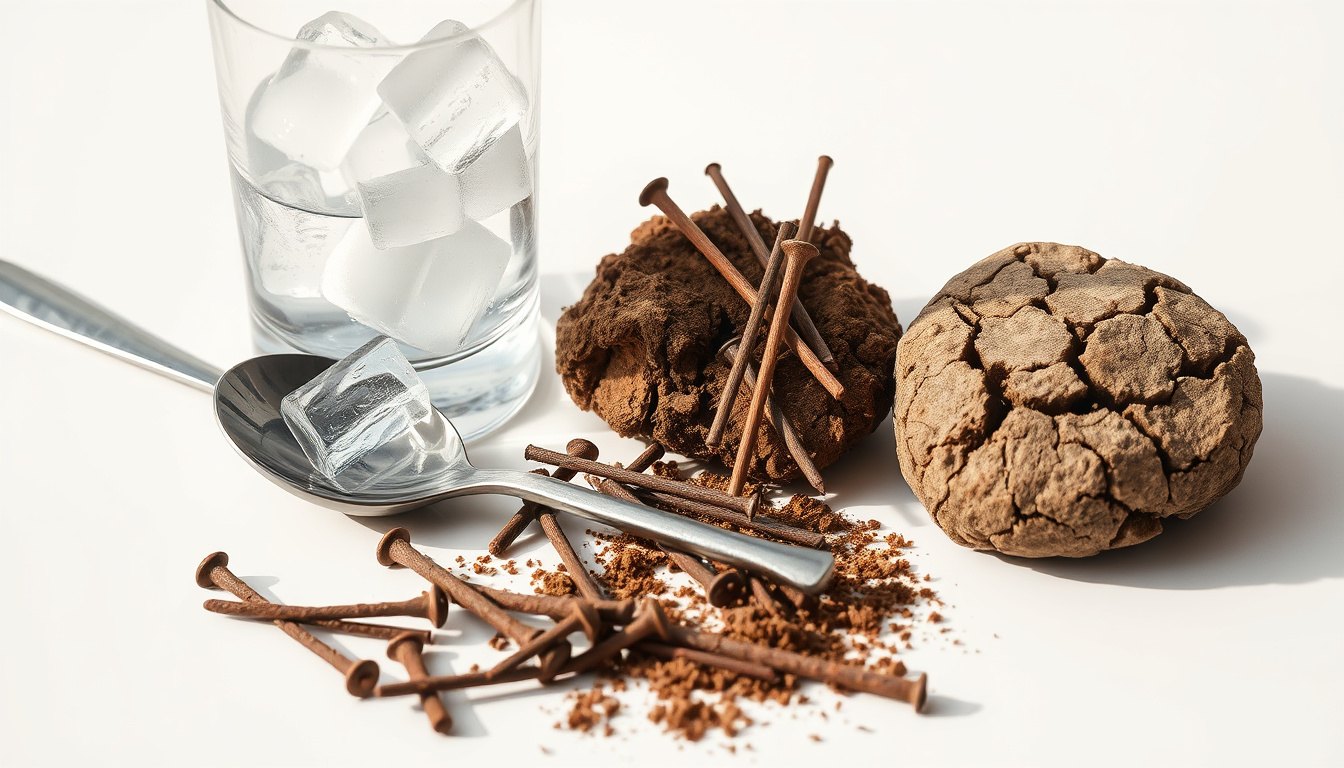
One of the most recognizable weird signs is pica — a craving for nonfood items. Among iron-deficient people, ice chewing (called pagophagia) is the most common form, affecting 87.3% of pica cases in one study of 103 patients (Barton et al., PMC). The Mayo Clinic acknowledges odd cravings for items like rubber or detergents as a symptom akin to pica (Mayo Clinic).
Pica and ice chewing
Pagophagia may temporarily sharpen alertness because chewing ice constricts blood vessels, then they rebound with more blood flow to the brain (Healthline). Across 83 studies involving 6,407 pica cases, pica showed a frequency of 11% in iron-deficient patients and was associated with 2.35 times greater odds of anemia (Miao et al., PMC).
Why cravings happen
Researchers theorize iron deficiency alters neurotransmitter function and sensory processing in ways that make nonfood substances feel rewarding. The good news: pica resolved in all 20 reviewed articles after iron treatment, typically within three weeks of IV iron infusion (PMC).
Does low iron affect your appearance?
Yes — in ways that are easy to dismiss as normal aging or stress. Iron deficiency disrupts the hair growth cycle, pushing follicles prematurely into a resting phase called telogen effluvium. The result: noticeable thinning and excessive daily hair loss that wasn’t there before (Healthline).
Hair loss and thinning
In a 2023 study in Taiwan, iron deficiency accounted for 70.3% of alopecia cases in females (Medical News Today). The NHS lists hair loss as a recognized symptom alongside pica and other less obvious signs (NHS). Unlike hereditary hair loss, deficiency-related shedding typically reverses once iron levels normalize.
Skin paleness and itchiness
Skin that looks notably paler than usual — especially on the inner eyelids, gums, or nail beds — often signals iron deficiency anemia (Mayo Clinic). Dry skin and an uncomfortable itchy sensation also frequently accompany low iron, though doctors don’t fully understand why itchiness occurs. Some people develop koilonychia, or spoon-shaped nails, which is a marker of prolonged deficiency (Dr. Karun Hematology).
What are the worst symptoms of low iron?
Beyond fatigue, the symptoms that patients often find most alarming are the ones that feel “off” in subtle but persistent ways. Tinnitus — a ringing, buzzing, or whooshing sound in the ears — qualifies as one of these, especially because it often strikes without other obvious signs of anemia.
Tinnitus and hearing issues
Iron deficiency anemia shows a dose-dependent link to new-onset tinnitus in women, with a hazard ratio of 2.53 for moderate IDA and 2.45 for severe IDA at 3-year follow-up (PMC). The NHS explicitly lists tinnitus as a symptom of iron deficiency anaemia (NHS). The mechanism involves cochlear hypoxia, mitochondrial dysfunction, and turbulent blood flow as the heart works harder from reduced oxygen-carrying capacity (PMC).
Restless legs and tongue soreness
Restless legs syndrome (RLS) appears with unusual frequency in iron-deficient patients, creating an irresistible urge to move the legs, especially at rest (Healthline). A swollen or sore tongue (glossitis) develops when iron drops critically low, flattening the tongue’s surface grooves and making eating uncomfortable (Medical News Today). Alopecia is listed as a clinical symptom of IDA alongside pica and glossitis in the research literature (PMC).
What are the red flags for iron deficiency anemia?
Certain symptoms serve as warning signals that something deeper is wrong. Headaches, strange tastes, itchy skin, and tongue soreness together form a constellation that clinicians recognize as consistent with iron deficiency anemia — especially when they cluster rather than appear alone.
Headaches and strange tastes
Frequent headaches without other explanation can signal iron deficiency anemia, particularly when combined with fatigue. Some patients also report food tasting “off” or metallic — a phenomenon called dysgeusia linked to the same nutritional shortfall (Healthline). The pattern across sources suggests these neurological and sensory symptoms emerge because low iron impairs oxygen delivery to the brain.
Itchy skin and fatigue
Feeling itchy without a visible rash is a red flag that doctors see more often than patients realize. Combined with extreme tiredness, shortness of breath, and cold hands or feet, persistent itching points toward iron deficiency anemia (NHS). Serum ferritin remains the most reliable diagnostic marker — it’s the go-to test that catches deficiency even when hemoglobin appears borderline normal (PMC).
Five distinct weird signs — pica, tinnitus, hair loss, sore tongue, and restless legs — appear across both Tier 1 sources (Mayo Clinic, NHS, PMC) and Tier 2 sources (Healthline, Medical News Today). When two or more show up together, iron deficiency anemia becomes a likely explanation.
How to boost iron immediately?
Getting iron levels up fast involves two tracks: dietary iron and medical intervention. For mild deficiency, food sources matter. For moderate to severe cases, supplements or IV iron make the difference.
Fast natural foods and drinks
Heme iron sources (animal-based) absorb 2-3 times more efficiently than non-heme (plant-based). Liver, red meat, shellfish, and sardines rank highest. Lentils, spinach, pumpkin seeds, and tofu offer solid non-heme options for vegetarians. Vitamin C at the same meal dramatically boosts non-heme absorption — squeezing lemon on spinach or drinking orange juice with iron-fortified cereal helps (Healthline).
Eggs and other sources
Two eggs a day provides meaningful iron (about 3 mg total, depending on preparation) alongside protein and B vitamins that support energy. However, eggs contain compounds that slightly inhibit iron absorption, so they’re a helpful part of an iron-conscious diet rather than a standalone solution (Dr. Karun Hematology). High-risk groups — women with heavy periods, pregnant women, vegetarians, and people with digestive disorders — benefit most from combining food-based iron with periodic screening (Dr. Karun Hematology).
Iron deficiency anemia in women presenting with tinnitus warrants routine screening according to PMC research. Early detection transforms the treatment timeline: pica resolves within weeks, hair regrowth follows within months, and tinnitus improves as oxygen-carrying capacity returns to normal.
What we know and what we don’t
Confirmed
- Pica ice craving confirmed by Mayo Clinic and NHS
- Tinnitus linked to iron deficiency via dose-dependent hazard ratios (PMC)
- Hair loss affects 70.3% of female alopecia cases in 2023 Taiwan data
- Pica resolves within 3 weeks after iron treatment in all 20 reviewed cases
- Serum ferritin is the most reliable diagnostic marker
Unclear
- Whether weight gain is a direct symptom or consequence of lifestyle factors
- Which organ bears the most damage in advanced iron deficiency stages
- Whether two eggs daily provides sufficient iron for all adults
- Whether brittle nails always indicate prolonged deficiency or other causes
Ice was the most common pica item (87.3% out of 103 patients reported). Pica had an association of 2.35 times greater odds of anemia and lower zinc concentrations.
— Barton et al., PMC (Study of 103 patients with pica)
Iron deficiency accounted for 70.3% of alopecia cases in females.
— 2023 Taiwan study (Medical News Today reporting)
These findings support routine IDA screening in women presenting with tinnitus.
— PMC study authors (3-year follow-up research)
The five weird signs — pica, tinnitus, hair loss, tongue soreness, and restless legs — share a common thread: each gets dismissed or attributed to something else until anemia shows up on a blood test. Mayo Clinic frames iron deficiency anemia as involving tiredness, shortness of breath, and heart palpitations alongside odd cravings and sore tongue. NHS extends that list to include tinnitus, hair loss, and pica. The gap between what most people expect from “low iron” and what actually shows up clinically is where delayed diagnosis happens.
Related reading: Type 2 Diabetes Symptoms · Lupus Symptoms
pmc.ncbi.nlm.nih.gov, economictimes.com, ncneurospine.com, genesisobgyn.net
Unusual symptoms like ice cravings and tinnitus, highlighted in Canadian health analysis, match insights from trusted sources such as Mayo Clinic and NHS for early detection.
Frequently asked questions
What is stage 3 iron deficiency?
Stage 3 iron deficiency occurs when iron stores are severely depleted and anemia develops. At this point, symptoms become more pronounced — fatigue worsens, cognitive issues may appear, and weird signs like pica, tinnitus, and hair loss often become harder to ignore. Serum ferritin typically drops below 15 ng/mL at this stage.
What drains iron from your body?
Heavy menstrual bleeding, gastrointestinal bleeding, frequent blood donation, pregnancy, and certain medications (like antacids or proton pump inhibitors) can deplete iron over time. Intense athletic training also increases iron loss through sweating and foot-strike hemolysis.
What drink is very high in iron?
Heme iron concentrates found in liver smoothies or fortified nutritional drinks deliver the highest iron per serving. For plant-based options, iron-fortified cereals mixed with orange juice or smoothies containing lentils and spinach provide meaningful amounts with vitamin C to enhance absorption.
Is 2 eggs a day enough iron?
Two eggs daily provides roughly 3 mg of iron — adults typically need 8-18 mg daily depending on age, sex, and life stage. Eggs alone won’t cover requirements for most people, but they contribute meaningfully as part of a varied diet that includes other iron sources.
Which organ is most affected by anemia?
The brain and heart are particularly vulnerable because they require consistent oxygen delivery. Cognitive fog, dizziness, and tinnitus reflect brain oxygen deprivation, while heart palpitations and fatigue signal the heart compensating for reduced oxygen-carrying capacity.
Can iron deficiency cause restless legs?
Yes. Restless legs syndrome (RLS) appears significantly more often in iron-deficient patients, and research shows iron supplementation often relieves RLS symptoms when ferritin levels are low.
What are effects of iron deficiency on skin?
Iron deficiency causes pale skin, dry or itchy skin, spoon-shaped nails (koilonychia), and slowed wound healing. The paleness results from reduced hemoglobin, while itchiness may relate to changes in skin cell turnover and barrier function.
How does low iron cause headaches?
Reduced hemoglobin means less oxygen reaches brain tissue. This triggers compensatory vasodilation (widening blood vessels) in cranial arteries, which activates pain pathways and produces the characteristic dull, persistent headache pattern seen in iron deficiency anemia.

Rachel Bennett leads fact-checking, source verification and corrections at Coast Pulse.