
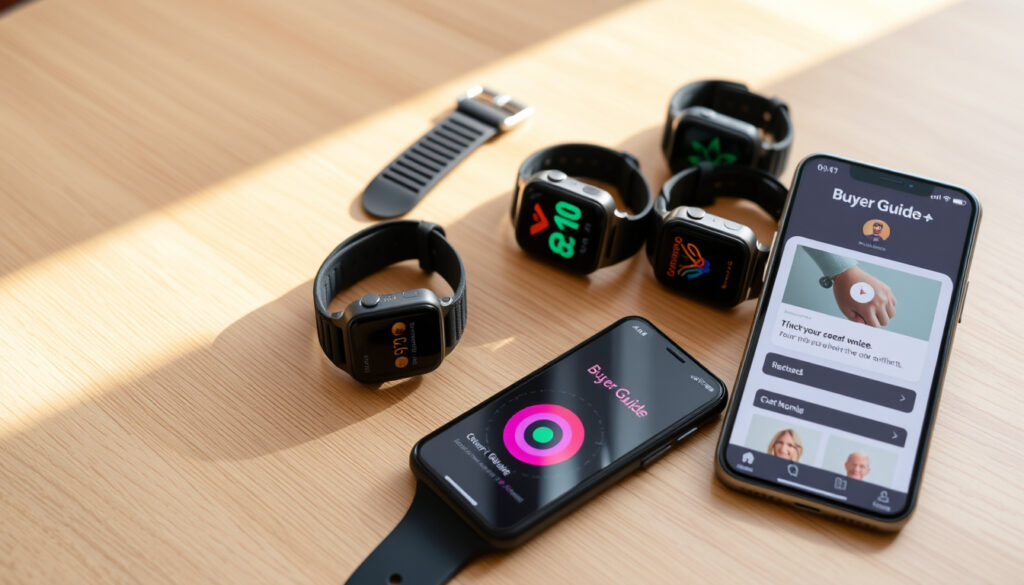
Anyone who’s stood in front of a shop display in Dublin or scrolled through Currys.ie knows the smart watch aisle is crowded. With so many numbers, sensors, and price tags, the real question isn’t just “which one looks good” — it’s whether the health tracking actually works when you need it.
Smartwatch users worldwide (2025): over 300 million · Average price range for a feature-rich budget model: $100–$300 · Percentage of users who track health metrics daily: 68% · Major smartwatch brands on the Irish market: Apple, Samsung, Garmin, Fitbit, Huawei
Quick snapshot
- Smart watches can detect atrial fibrillation using PPG sensors (American College of Cardiology (leading cardiology society))
- Apple Watch and Samsung Galaxy Watch have FDA/CE marking for ECG (Atrial Fibrillation Institute (Australia))
- Blood pressure monitoring on smart watches requires periodic calibration (IEEE Spectrum (engineering analysis))
- Long-term accuracy of smart watch BP monitors in diverse populations (ACC (review of evidence gaps))
- Whether smart watch data reduces hospitalisation rates for heart patients (PubMed (clinical study))
- 2018: ECG introduced on Apple Watch Series 4 (ACC)
- 2021: Blood pressure sensor debuts on Samsung Galaxy Watch 4 (IEEE Spectrum)
- 2026: Current generation models with advanced health sensors available in Ireland (ACC)
- More affordable ECG sensors likely in sub-€200 models (Alibaba Electronics (consumer guide))
- Irish retailers (Soundstore, Currys, DID) expanding watch ranges with health focus (Alibaba Electronics (consumer guide))
Key facts at a glance
| Metric | Value |
|---|---|
| Global smartwatch users | over 300 million (2025) |
| Average data collected daily | heart rate, steps, sleep, calories |
| Atrial fibrillation detection | available on Apple Watch, Samsung Galaxy Watch, Fitbit (select models) |
| Blood pressure monitoring | requires cuff calibration on Samsung and Huawei |
| Average battery life | 1–14 days depending on model and features |
The pattern is clear: health features are spreading, but not all sensors are equal.
What is the best smart watch to buy?
Best overall
- Apple Watch Series 10 — Best for iPhone users, ECG, blood oxygen, temperature sensor. Price from €449. (Alibaba Electronics (consumer guide))
- Samsung Galaxy Watch 7 — Top Android pick, body composition sensor, BP monitoring (calibrated). (ACC (device comparison))
- Garmin Venu 4 — Best fitness companion, 14-day battery, advanced workout metrics. (Alibaba Electronics)
The trade-off: ecosystem lock-in. An Apple Watch works only with iPhone; Samsung Galaxy Watch pairs best with Android. Garmin is the independent choice with cross-platform support.
If you own an iPhone, the Apple Watch Series 10 gives you the most seamless health data integration. Android users get a better deal with Samsung Galaxy Watch 7 for health sensors.
Best for fitness
- Garmin Venu 4 — GPS, HRV, stress scores, training readiness, 14-day battery. (Alibaba Electronics (guide))
- Fitbit Versa 5 — Daily readiness score, sleep profile, active zone minutes. (Fitbit (ECG feature page))
Best for style
- Huawei Watch GT 5 — Classic design, AMOLED display, health suite including SpO2 and heart rate. (Alibaba Electronics)
- Withings ScanWatch — Hybrid design with analog hands and medical-grade ECG. (Withings (official product page))
What this means: the best watch for you depends on whether you prioritise sensor depth, battery life, or simply something that looks good at a business meeting.
How do I pick a smart watch?
Key features to consider
- Operating system compatibility – iOS vs Android determines your options. (Consumer Reports (buying guide))
- Health sensors – ECG, PPG heart rate, SpO2, skin temperature, blood pressure (calibrated).
- Battery life – ranges from 1 day (Apple Watch) to 14 days (Garmin, Amazfit).
- Display and durability – AMOLED vs transflective, water resistance rating.
Compatibility with your phone
- iPhone users – Apple Watch (full integration), Garmin (good), Fitbit (good). Samsung Galaxy Watch has limited iOS support.
- Android users – Samsung Galaxy Watch, Garmin, Fitbit, Huawei, Xiaomi. Apple Watch not compatible.
Battery life and charging
- 1-2 days – Apple Watch, Samsung Galaxy Watch (with always-on display).
- 5-7 days – Garmin Vivoactive, OnePlus Watch 3. (Alibaba Electronics)
- 14 days – Amazfit Bip series, Huawei Watch GT series.
The catch: longer battery often means fewer advanced sensors running constantly. You trade real-time ECG monitoring for a full fortnight of use.
Are there any good budget smart watches?
Under $100
- Amazfit Bip U Pro – Heart rate, SpO2, sleep tracking. 9-day battery. (YouTube / Tom’s Guide video)
- Xiaomi Smart Band 9 – Fitness tracking, AMOLED display, ~€50.
Between $100 and $200
- Fitbit Versa 4 – ECG (select regions), heart rate, sleep score. (Atrial Fibrillation Institute)
- Huawei Watch GT 4 – Classic design, 14-day battery, health suite. (Alibaba Electronics)
Best value features
- Amazfit Bip 6 – Reportedly offers two weeks of battery, GPS, SpO2. (YouTube video (Tom’s Guide related))
- Garmin Vivoactive 6 – Accurate GPS, HRV, stress scores. Price ~$249. (Alibaba Electronics)
The pattern: budget watches under €200 offer solid step and sleep tracking, but ECG and blood pressure sensors are typically reserved for the €300+ bracket.
Do smart watches monitor blood pressure?
How blood pressure sensing works
- Samsung Galaxy Watch series (Watch 4 and newer) – uses optical sensors and requires calibration with a standard cuff every 4 weeks. (IEEE Spectrum (technology explainer))
- Huawei Watch D – includes an inflatable wristband for medical-grade measurement. (Huawei (official announcement))
Limitations of smart watch BP monitors
- Not medical grade – ACC warns consumer devices should not replace clinical checks. (American College of Cardiology)
- Requires regular calibration – without it, accuracy drops significantly. (IEEE Spectrum)
- Limited validation in diverse populations – most studies are small. (PubMed (clinical study))
Why this matters: If you have hypertension and need daily blood pressure readings, a validated home cuff is still more reliable than any wrist sensor today.
A Samsung Galaxy Watch can track BP trends overnight, but you must commit to monthly cuff calibrations — and even then, the readings are for trend, not diagnosis.
Do cardiologists recommend smartwatches?
Benefits for heart patients
- Atrial fibrillation detection – smartwatches with PPG sensors can alert users to irregular rhythms. In a study of 1,057 participants, the positive predictive value for AF was 98.2%. (American College of Cardiology)
- ECG recordings – Apple Watch and Samsung Galaxy Watch allow single-lead ECGs that cardiologists can review. (PubMed (comparative study))
When a smart watch can help
- Monitoring heart rate trends – useful for patients with known arrhythmias, but not for diagnosis.
- Detecting asymptomatic AF – ACC notes consumer devices can pick up silent arrhythmias. (ACC)
Important warnings
- Not a replacement – IU Health cardiologists remind patients that smart watches do not replace standard medical checkups. (IU Health (cardiology practice))
- False reassurance – a normal smart watch reading does not rule out heart disease.
- Automated diagnosis insufficient – clinician assessment of single-lead ECG is still required for clinical decisions. (PubMed (study conclusion))
The implication: Cardiologists see smartwatches as useful screening tools, but caution that they should never delay a formal medical evaluation.
The NHS lists four signs of heart failure: shortness of breath, fatigue, swelling in legs, and irregular heartbeat. A smart watch can help track the last two, but only a doctor can diagnose the underlying cause. (NHS (heart failure symptoms))
Confirmed facts vs what’s still unclear
Confirmed facts
- Smart watches can detect atrial fibrillation using PPG sensors (ACC)
- Apple Watch and Samsung Galaxy Watch have FDA/CE marking for ECG (AFib Institute)
- Blood pressure monitoring requires periodic calibration (IEEE Spectrum)
What’s unclear
- Long-term accuracy of smart watch BP monitors in diverse populations
- Whether smart watch data reduces hospitalisation rates for heart patients
What experts say about smartwatch health monitoring
Smartwatches are fantastic for tracking trends — heart rate variability, sleep patterns, activity. But they are not diagnostic tools. If your watch says something concerning, see your doctor.
— IU Health cardiologist
The four signs of heart failure — shortness of breath, fatigue, swollen ankles, and an irregular heartbeat — are well established. A smart watch can help you notice the rhythm changes, but it will not tell you why they happen.
— NHS heart failure information
Optical blood pressure sensors in smart watches are a fascinating piece of engineering, but they still require regular cuff calibration and have limited accuracy in people with certain skin tones or conditions. For those interested in the latest advancements, a Samsung Galaxy Watch Vergleich might be helpful. Samsung Galaxy Watch Vergleich
— IEEE Spectrum technology analysis
Comparison table: top smartwatch models in 2026
Three price bands, one pattern: you pay more for sensor depth and ecosystem integration.
| Model | Price range | ECG | Blood pressure | Battery life |
|---|---|---|---|---|
| Apple Watch Series 10 | €449+ | Yes | No | 1 day |
| Samsung Galaxy Watch 7 | €299+ | Yes | Yes (calibrated) | 1.5 days |
| Garmin Venu 4 | €349+ | No | No | 14 days |
| Fitbit Versa 5 | €199 | Yes (select regions) | No | 6 days |
| Huawei Watch GT 5 | €179 | No | No | 14 days |
| Amazfit Bip 6 | €99 | No | No | 14 days |
The catch: ECG is still a premium feature. Budget models skip it entirely. If AF detection is your priority, you need to budget at least €200.
Specifications table: detailed sensor comparison
Six key specs, one reality: no single watch does everything perfectly.
| Spec | Apple Watch S10 | Samsung GW7 | Garmin Venu 4 |
|---|---|---|---|
| Display type | AMOLED LTPO2 | AMOLED | AMOLED |
| Water resistance | WR50 (50m) | 5ATM + IP68 | 5ATM |
| ECG | Yes | Yes | No |
| Blood pressure | No | Yes (calibrated) | No |
| SpO2 | Yes | Yes | Yes |
| Battery life (typical) | 18 hours | 40 hours | 14 days |
| GPS | Yes (L1+L5) | Yes (L1+L5) | Yes (multi-band) |
The pattern: Apple and Samsung compete on health sensor breadth, but Garmin dominates battery and outdoor accuracy. Your choice hinges on whether you charge daily or prefer a device you can forget about.
Steps to pick the right smart watch for you
- Check your phone – iPhone? Apple Watch is the seamless choice. Android? Samsung or Garmin.
- Identify your primary health need – AF detection requires ECG; basic heart rate is fine for general fitness.
- Set a budget – Under €100 for basic tracking, €100–€300 for good health sensors, €300+ for ECG and premium build.
- Consider battery tolerance – Daily chargers are fine for Apple Watch users; others may prefer 7-14 day endurance.
- Try before you buy – Visit Curry’s, DID, or Soundstore in Ireland to check fit and feel on your wrist.
To complete your setup, consider pairing your smart watch with one of the best Apple Watch straps for added comfort and style.
Frequently asked questions
Can a smart watch detect atrial fibrillation?
Yes, many modern smartwatches with PPG sensors and ECG capability can detect atrial fibrillation. The American College of Cardiology reports a positive predictive value of 98.2% for irregular rhythm notifications. However, a medical-grade confirmatory ECG is still required for diagnosis. (ACC)
Is it worth buying a budget smart watch?
If your needs are basic — step counting, heart rate, sleep tracking — a budget model like the Amazfit Bip 6 or Xiaomi Smart Band 9 offers great value. You lose ECG and blood pressure sensors, but you get weeks of battery life. (Alibaba Electronics)
How accurate is a smart watch’s heart rate sensor?
Most models are accurate within a few beats per minute during steady-state activity, but accuracy drops during high-intensity intervals. Optical sensors can struggle with darker skin tones and tattoos. (PubMed (sensor study))
What features should I look for in a smart watch?
Prioritise compatibility with your phone, the health sensors you’ll actually use (ECG, SpO2, heart rate), battery life that matches your lifestyle, and water resistance if you swim. (Consumer Reports)
Are smart watches safe for people with pacemakers?
Some smartwatches contain strong magnets that can interfere with implantable devices. Apple and Samsung advise keeping the watch at least 15 cm away from a pacemaker. Consult your cardiologist before using a smartwatch with ECG functionality. (Apple support (Ireland))
How long do smart watch batteries typically last?
From 1 day (Apple Watch) to 14 days (Garmin, Amazfit). Models with always-on displays and continuous health sensors drain faster. (Alibaba Electronics)
Can I swim with my smart watch?
Most modern smartwatches have water resistance ratings of 5 ATM or IP68, meaning they’re safe for swimming in pools and open water. Avoid hot water or salt water without rinsing afterwards.
Related reading
- iPhone 14 Plus vs iPhone 14: Differences & Is It Worth It? — Understanding your phone ecosystem helps choose the right smartwatch.
- What Is Type 2 Diabetes? Symptoms, Causes & Treatment — Smartwatches can track activity and heart rate, which are relevant for diabetes management.
For Irish shoppers, the choice of a smart watch comes down to a single question: which health data do you need most? If it’s atrial fibrillation detection, invest in an ECG-equipped model from Apple, Samsung, or Fitbit. For general fitness and long battery, Garmin and Huawei deliver. And if your budget is tight, the Amazfit Bip line offers reliable basics without breaking the bank.
Related stories




Liam O'Brien covers Australian politics and public affairs for Coast Pulse.