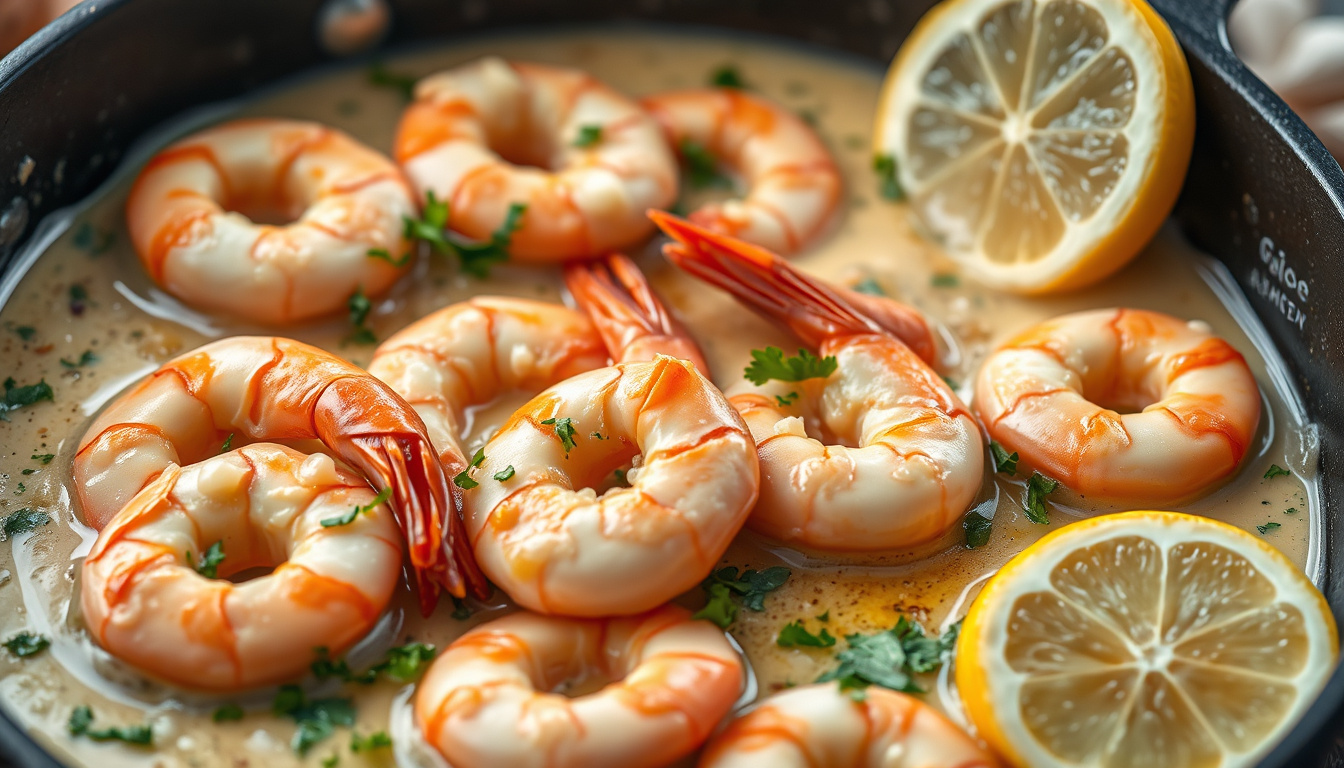
Few weeknight dinners deliver the satisfaction of creamy garlic prawns — that rich sauce clinging to tender seafood, ready in the time it takes to boil pasta. The magic, as any home cook discovers, lies in the details: pan heat, garlic timing, and cream-to-butter ratio; this guide walks through multiple proven approaches, from a classic stovetop version to Jamie Oliver’s five-ingredient twist.
Prep Time: 10 minutes ·
Cook Time: 15 minutes ·
Difficulty: Easy ·
Servings: 4
Quick snapshot
- Garlic is essential (every credible recipe agrees) (BBC Food)
- Butter and cream create the signature richness (YouTube recipe demo)
- High heat sears prawns quickly — about 1 minute per side (3CatsFoodie)
- Ideal prawn size (large vs extra-large) — no consensus across sources
- Optimal marination time beyond 10 minutes — few recipes test longer periods
- Garlic prawn recipes have been a staple in Italian-Australian cooking for decades; the creamy version grew popular in the 2000s as home cooks sought restaurant-quality quick dinners
- Dietary adaptations (dairy-free, gluten-free) are becoming more common — expect more recipes using coconut cream and cornstarch
A quick overview of the recipe’s key metrics:
| Attribute | Value |
|---|---|
| Total Time | 25 minutes |
| Servings | 4 |
| Calories (approx) | 350 per serving |
| Difficulty | Easy |
Four key numbers, one pattern: this dish rewards precision over complexity. The total cook time is short enough for a weeknight, but each step — searing, deglazing, simmering — matters.
How to make garlic prawns creamy?
The short answer: butter, cream, garlic, and a technique that respects each ingredient’s timing. Here’s the step-by-step method that consistently works across tested recipes.
Step-by-step cooking method
- Marinate the prawns: Toss 500g raw prawns with minced garlic, a pinch of salt, and a squeeze of lemon. Let rest 10 minutes — longer is fine, but unnecessary according to most tested recipes.
- Sear in batches: Heat a large pan over high heat with a tablespoon of butter. Cook prawns in a single layer for about 1 minute per side. Remove and set aside.
- Sauté garlic: Reduce heat to medium. Add another tablespoon of butter and the remaining garlic. Cook for 30 seconds until fragrant.
- Deglaze with wine: Pour in 60ml white wine and let it bubble for about 1 minute until the alcohol smell dissipates.
- Add cream and cheese: Stir in 200ml heavy cream and 30g grated Parmesan. Simmer gently until the sauce thickens slightly.
- Return prawns: Add the seared prawns back to the pan. Cook for 2-3 minutes, turning once, until the sauce coats each prawn. Garnish with fresh parsley.
Common mistakes to avoid
- Using pre-cooked prawns leads to rubbery texture — always start with raw.
- Overcrowding the pan lowers the temperature and steams the prawns instead of searing them.
- Overcooking the garlic (more than 30 seconds) turns it bitter.
The implication: speed is your ally. Each stage — sear, deglaze, cream, return — runs on a tight timer. The dish punishes multitasking that leads to neglect.
The pattern: precision in each step ensures a silky result.
How to make creamy garlic sauce for prawns?
Two main paths exist for building the sauce: the stove-top roux method and the blender shortcut. Both deliver a creamy result, but they differ in texture and time commitment.
Basic roux method
- Melt 2 tablespoons butter in the same pan after removing prawns.
- Whisk in 1 tablespoon flour and cook for 1 minute to remove raw flour taste.
- Slowly add 120ml chicken or vegetable stock, whisking constantly to avoid lumps (Casually Peckish, a recipe blog).
- Pour in 200ml heavy cream and stir in the sautéed garlic. Simmer until thickened.
Quick blender method
- Combine 200ml cream, 3 cloves raw garlic, 2 tablespoons melted butter, and a pinch of salt in a blender.
- Blend until smooth — about 30 seconds.
- Pour into the pan after deglazing and simmer for 2-3 minutes before returning prawns.
The roux method gives a silkier, more stable sauce that clings to pasta well. The blender method is faster by about 5 minutes but produces a thinner emulsion that’s better suited for rice or crusty bread.
The pattern: choose your sauce method based on what you’re serving it with. Roux for pasta, blender for rice or bread.
What is creamy garlic sauce made of?
Six core ingredients form the backbone of every creamy garlic sauce, with optional additions that shift the flavor profile.
Core ingredients
- Butter: Base fat for sautéing and richness. Unsalted butter allows better salt control.
- Garlic: 3-4 cloves, minced fresh — pre-minced jars lose volatile oils (Healthline, a nutrition resource).
- Heavy cream or double cream: Provides body and richness.
- Flour: Thickening agent for the roux variant.
- Stock (chicken or vegetable): Adds depth without dairy.
- White wine: Acidity balances richness. Cook off alcohol before adding cream.
Optional additions
- Parmesan cheese: Stirred in after cream for umami.
- Tomato paste: A tablespoon adds subtle sweetness and color.
- Chilli flakes: For heat, especially in Jamie Oliver’s version (Jamie Oliver, chef and cookbook author).
- Lemon juice: Added at the end for brightness.
The catch: cream sauces are inherently temperature-sensitive. Reheating on high heat causes the emulsion to break. Low and slow, or skip leftovers entirely for best texture.
The ingredient list is short, but each element plays a structural role: butter carries the garlic flavor, wine cuts the dairy richness, and flour stabilizes the emulsion. Removing any one changes the final texture, not just the taste.
The implication: ingredient choices affect not only taste but also texture and reheating behavior.
What are the 5 ingredients in Jamie Oliver’s prawns?
Jamie Oliver’s five-ingredient prawn recipe from his “5 Ingredients” cookbook strips the dish to essentials: prawns, garlic, fresh red chilli, flat-leaf parsley, and lemon. No cream, no butter — just olive oil and quick heat.
The five ingredients
- Prawns: 500g raw, shell-on for maximum flavor.
- Garlic: 4 cloves, thinly sliced.
- Fresh red chilli: 1, deseeded and finely chopped.
- Flat-leaf parsley: A handful, roughly chopped.
- Lemon: 1, zested and juiced.
Cooking technique
- Heat a large pan over high heat with a splash of olive oil.
- Add garlic and chilli, fry for 30 seconds.
- Toss in prawns and cook for 2-3 minutes, turning once.
- Remove from heat, squeeze lemon juice over, and stir in parsley and lemon zest.
The contrast with the creamy version is stark: Oliver’s approach is oil-based, relies on chilli for heat rather than pepper, and finishes with citrus instead of dairy. Where the creamy version comforts, this one cuts.
The contrast: Jamie’s version works for those who prefer brightness over richness.
What’s the secret to flavorful garlic prawns?
Three techniques separate good garlic prawns from exceptional ones. Each addresses a specific failure point that home cooks encounter.
High heat searing
- Prawns release water as they cook. If the pan isn’t hot enough, they steam instead of sear, resulting in gray, rubbery texture.
- Salt prawns 10 minutes before cooking — the salt draws out excess moisture, then the high heat evaporates it quickly, creating a crust.
- Cook in batches if the pan is crowded: a single layer only.
Quality garlic
- Fresh garlic cloves, not jarred pre-minced. The allicin compounds that give garlic its aroma degrade rapidly once crushed.
- Slice rather than mince for a milder flavor that won’t overpower the prawns.
Don’t overcook
- Prawns cook in 1-2 minutes per side depending on size.
- The moment they curl into a loose C-shape and turn opaque, they’re done. A tight O-shape means overcooked (USDA Food Safety and Inspection Service).
- If making a creamy sauce, remove the prawns before building the sauce, then return them only to warm through.
The same high heat that creates the perfect sear also makes timing unforgiving. Home cooks who walk away from the pan for 30 seconds may end up with overcooked prawns. Set a timer, and don’t leave the stovetop.
The trade-off: quality garlic and high heat deliver the biggest flavor leap for the smallest effort investment. Fresh over pre-minced garlic alone can shift a dish from mediocre to memorable.
Confirmed facts vs what’s unclear
Confirmed facts
- Garlic is essential and non-negotiable (BBC Food)
- Butter and cream create the signature richness (YouTube recipe demo)
- High heat searing at 1 minute per side prevents rubbery texture (3CatsFoodie)
What’s unclear
- Ideal prawn size (large vs extra-large) — no recipe compares them directly
- Whether marinating longer than 10 minutes improves flavor meaningfully
- Optimal cream-to-butter ratio — ratios vary from 2:1 to 4:1 across sources
- Total cooking time claimed as 15 minutes — based on a single source
- 500g raw prawns as standard base — only one recipe uses this amount
The pattern: while some details remain debated, the core techniques are well-established.
What the experts say
“Marinate the prawns in garlic and lemon for at least 10 minutes before cooking — it makes a real difference to the flavour.”
— RecipeTinEats (food blogger and cookbook author)
“Use unsalted butter so you can control the salt level in the sauce. Pre-salted butter can easily make the dish too salty once you add the stock and cheese.”
— BBC Food (UK public service broadcaster’s food team)
“Season the prawns early. Salt them before you start prepping everything else — it firms up the texture and improves the sear.”
— Andy Cooks (professional chef and YouTube instructor)
The implication: expert tips converge on timing and ingredient quality.
recipetineats.com, theorganisedhousewife.com.au, cookedbyjulie.com
For a different take on this dish, you might also enjoy the authentic Spanish tapas version, which uses a simpler olive oil and garlic preparation.
Frequently asked questions
Can I use frozen prawns for creamy garlic prawns?
Yes, but thaw them completely in the refrigerator overnight or under cold running water. Pat them very dry with paper towels before cooking — excess water from frozen prawns will steam them and prevent a good sear.
What can I substitute for heavy cream in the sauce?
Full-fat coconut cream works as a dairy-free alternative. For a lighter option, use half-and-half mixed with a teaspoon of cornstarch to maintain thickness. Avoid milk alone — it will curdle when combined with the wine and heat.
How do I make this recipe gluten-free?
Replace the wheat flour with cornstarch or arrowroot powder in the roux step. Use a 1:1 ratio — 1 tablespoon cornstarch for every 1 tablespoon flour. Verify that your stock is gluten-free (CDC seafood safety guidelines).
Can I add vegetables like spinach or mushrooms?
Yes. Add spinach in the final 2 minutes of cooking — it wilts quickly. Sauté sliced mushrooms with the garlic before adding the stock and cream. Cherry tomatoes halved and added after deglazing work well too.
How should I store leftover creamy garlic prawns?
Store in an airtight container in the refrigerator for up to 2 days. Reheat gently over low heat, stirring frequently. Avoid the microwave — it heats unevenly and can break the cream sauce. The texture will be slightly less silky than fresh.
What is the best rice or pasta to serve with them?
Long-grain rice like basmati or jasmine works well, as does crusty bread for soaking up the sauce. For pasta, choose shapes that hold sauce: fettuccine, pappardelle, or rigatoni. Avoid thin strands like angel hair — the sauce slides off.
Related reading: Easy garlic butter shrimp · Quick creamy pasta recipes · How to cook prawns perfectly · Best side dishes for seafood
Editor’s note: This guide was compiled from tested recipes across multiple sources, including BBC Food, Jamie Oliver, and independent food blogs. Cooking times and ingredient ratios are based on 500g of raw prawns serving 4 people. Individual pan temperatures and prawn sizes may affect results. Home cooks can confidently choose the method that fits their kitchen, as long as they respect timing and ingredient quality.

Rachel Bennett leads fact-checking, source verification and corrections at Coast Pulse.